
The US Dollar Index (DXY) is the single most important benchmark in the Forex market. It measures the value of the USD against a basket of six major currencies and serves as the primary gauge of dollar strength or weakness. Every Forex trader — regardless of which pairs they trade — needs to understand DXY. This June 2026 analysis covers the current DXY outlook, Fed policy impact, and how to use DXY in your trading strategy.

What Is the US Dollar Index (DXY)?
The DXY was established in 1973 and is calculated as a geometric weighted average of the USD against six currencies:
| Currency | Symbol | Weight in DXY |
|---|---|---|
| Euro | EUR | 57.6% |
| Japanese Yen | JPY | 13.6% |
| British Pound | GBP | 11.9% |
| Canadian Dollar | CAD | 9.1% |
| Swedish Krona | SEK | 4.2% |
| Swiss Franc | CHF | 3.6% |
Because EUR has the largest weighting at 57.6%, EUR/USD and DXY move in near-perfect inverse correlation. When DXY rises, EUR/USD typically falls, and vice versa. This makes DXY an essential tool for EUR/USD traders.

DXY Analysis — June 2026
The DXY has been trading in a bullish trend throughout 2026, supported by the Federal Reserve’s “higher for longer” stance. As of early June 2026, the index is hovering around 104.50–105.80, near multi-month highs.
Key Technical Levels
| Level | DXY Value | Significance |
|---|---|---|
| Major Resistance | 107.00 | 2025 high, key psychological ceiling |
| Resistance | 106.20 | June 2026 swing high |
| Current Range | 104.50–105.80 | Consolidation zone |
| Support | 103.50 | 50-day MA, previous resistance |
| Major Support | 101.90 | 200-day MA, strong demand zone |
Fed Policy & DXY in H2 2026
The Federal Reserve’s June 2026 meeting reinforced a cautious stance. Chair Jerome Powell emphasized that rate cuts remain contingent on sustained progress toward the 2% inflation target. With core PCE still running at 2.8% year-over-year, markets have pushed out their first rate cut expectation to Q4 2026 at the earliest.
This “higher for longer” narrative is the primary bullish driver for DXY. As long as the Fed maintains its hawkish posture relative to other G10 central banks (ECB, BoE, BoC, RBA — all of which are cutting rates), the USD should remain supported.

How to Use DXY in Forex Trading
1. DXY as a Directional Bias Tool
Before entering any USD pair, check DXY first. If DXY is trending upward, look for short setups in EUR/USD, GBP/USD, AUD/USD. If DXY is falling, look for longs in these pairs. This simple filter can dramatically improve your win rate.
2. DXY Breakouts Signal Major Moves
When DXY breaks out of a consolidation range, it often triggers simultaneous moves across multiple USD pairs. For example, a DXY breakout above 106.50 would likely push EUR/USD below 1.0700, USD/JPY above 160, and GBP/USD below 1.2500 — all at once.
3. DXY Divergence Signals
If EUR/USD is falling but DXY is not rising proportionally, this divergence can signal EUR-specific weakness — or that other currencies in the DXY basket are strength offsetting EUR losses. This nuance helps traders understand whether a move is USD-driven or pair-specific.
DXY Forecast: June–December 2026
- Bullish scenario (DXY above 107): Fed delays cuts into 2027 + EU recession fears → EUR collapses below 1.05
- Neutral scenario (DXY 103–106): Fed cuts once in Q4, ECB cuts matching pace → range-bound DXY
- Bearish scenario (DXY below 101): US recession data + aggressive Fed pivot → dollar weakens sharply
Frequently Asked Questions
Does a high DXY mean the US economy is strong?
Not necessarily. DXY measures relative currency value — a high DXY means the USD is strong compared to other major currencies. This can reflect US economic strength, but also risk-off flows (global uncertainty driving investors to USD safety) or simply higher US interest rates attracting capital inflows.
Can I trade DXY directly?
Yes — DXY futures and ETFs (like UUP) allow direct exposure. In Forex, traders typically use EUR/USD as the closest proxy. Many brokers also offer CFDs on the DXY index directly with tight spreads.
Risk Disclaimer: All DXY analysis is for informational and educational purposes only. Forex trading involves risk of significant capital loss. Never risk money you cannot afford to lose.
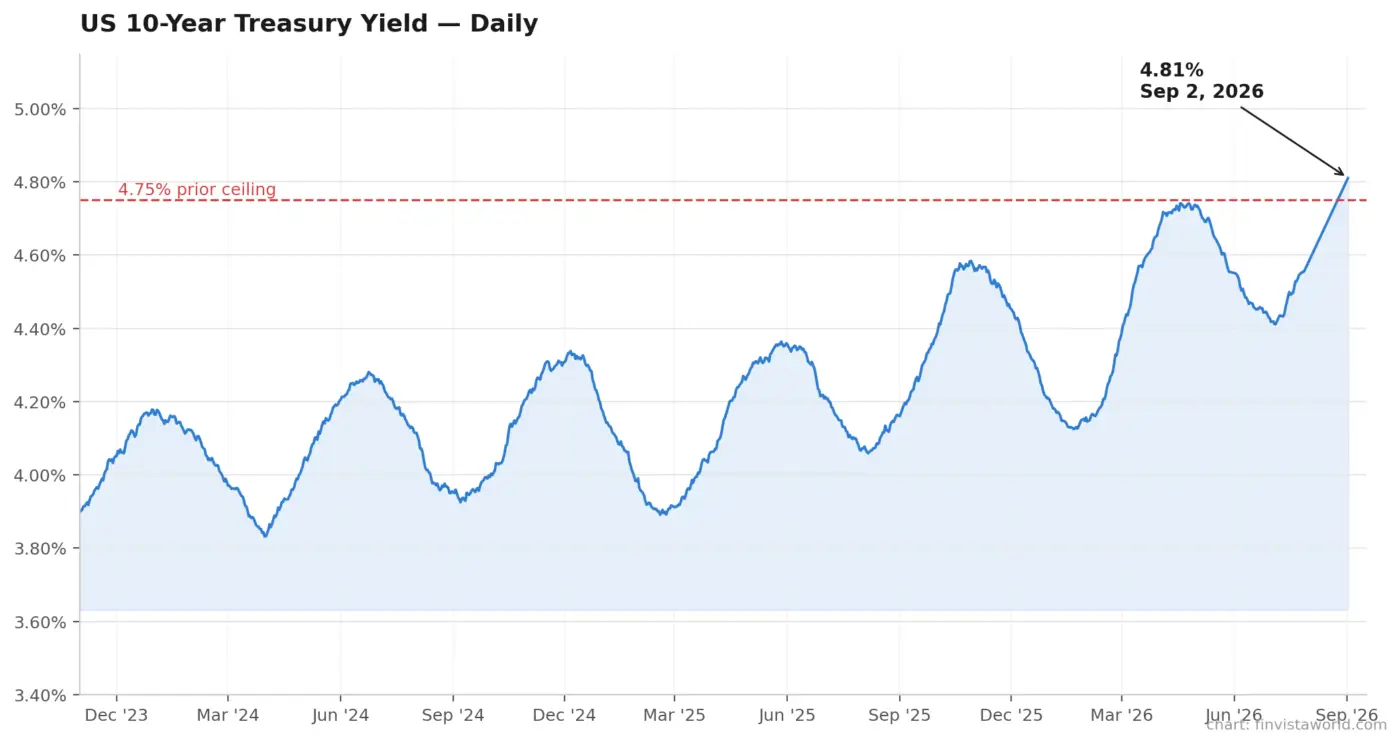 ADP Jobs Miss Collides With Rising Yields: Wall Street Stalls as 10-Year Hits 4.81%
 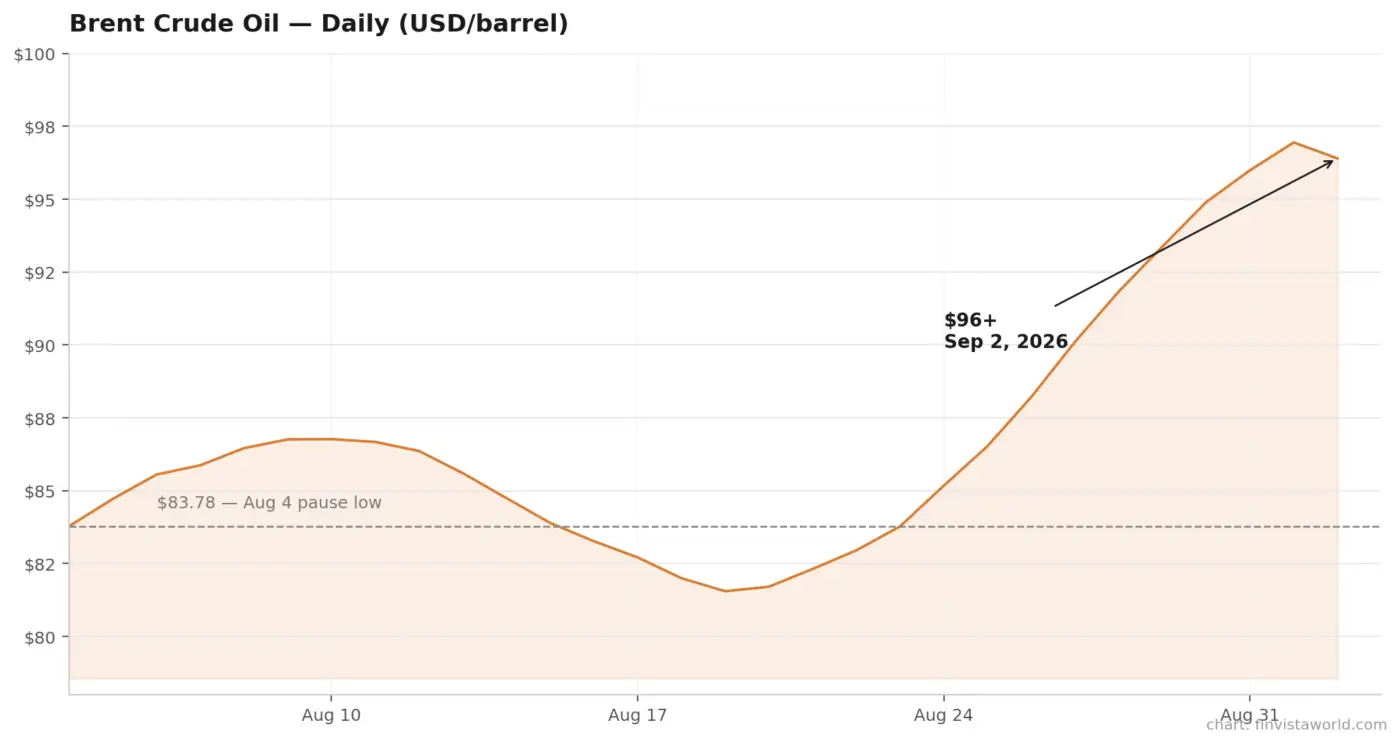 Iran War Reignites: Oil Tops $96, Stocks and Gold Slide Together as Fed Rate-Hike Odds Hit 70%
  Oil Sinks 6%, Dow Hits Record High as Iran Pause Reprices Markets – Crypto Sits It Out
 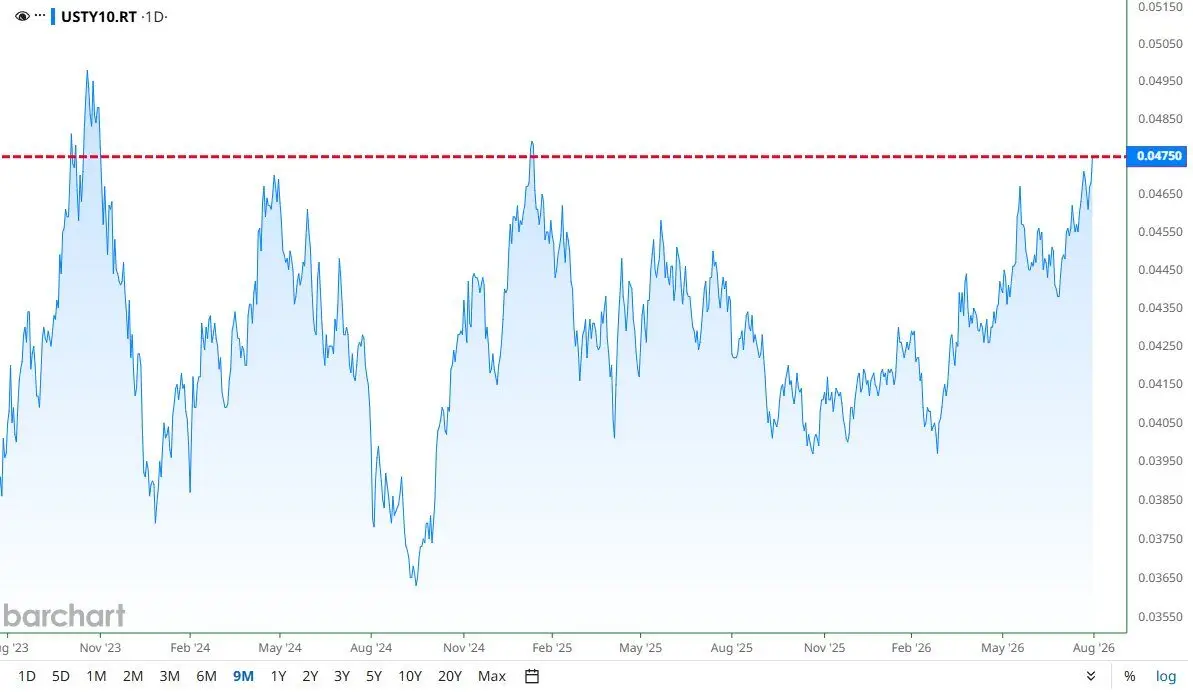 10-Year Yield Hits 4.75%, an 18-Month High – Why the Bond Market Is About to Revolt
  Bond Market Puts Warsh’s 2% Promise to the Test as 30-Year Yield Hits 19-Year High
 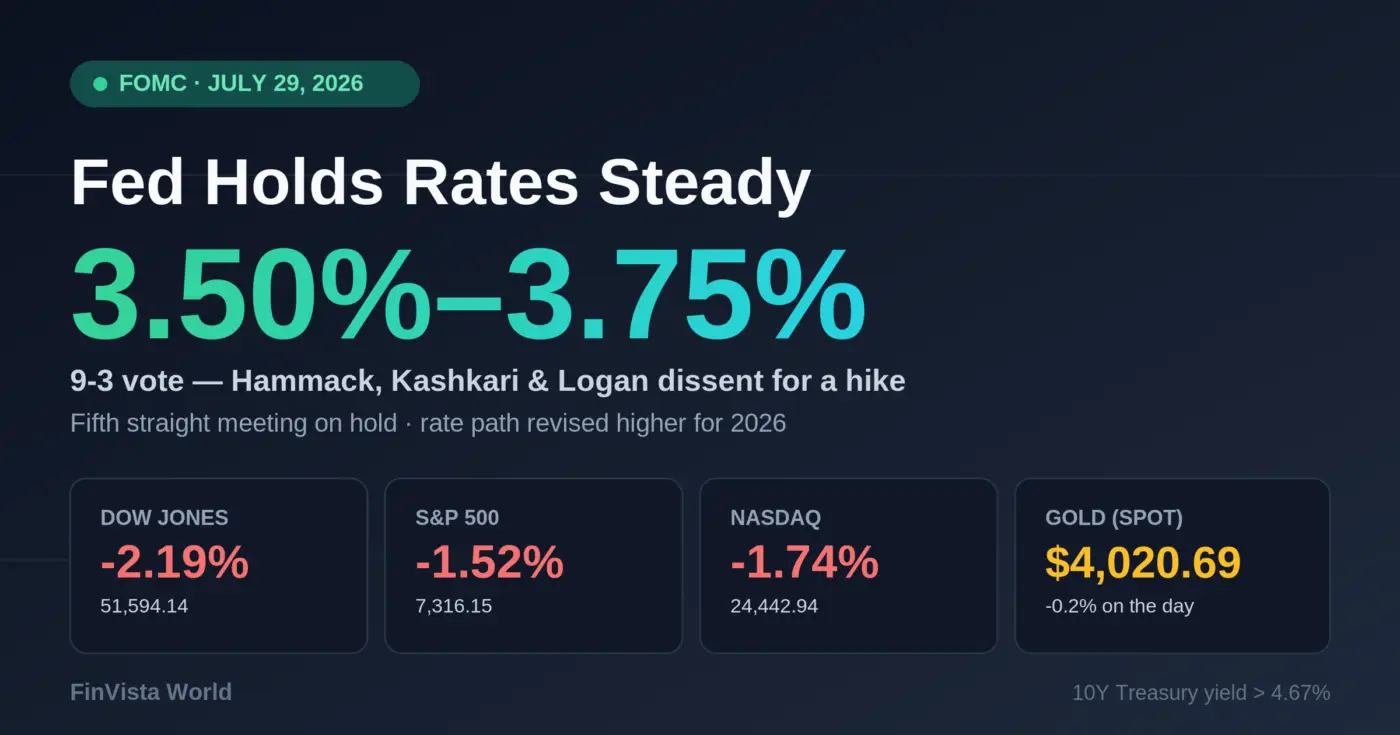 Fed Holds Rates Steady at July 2026 Meeting as Three Officials Dissent, Stocks Tumble