
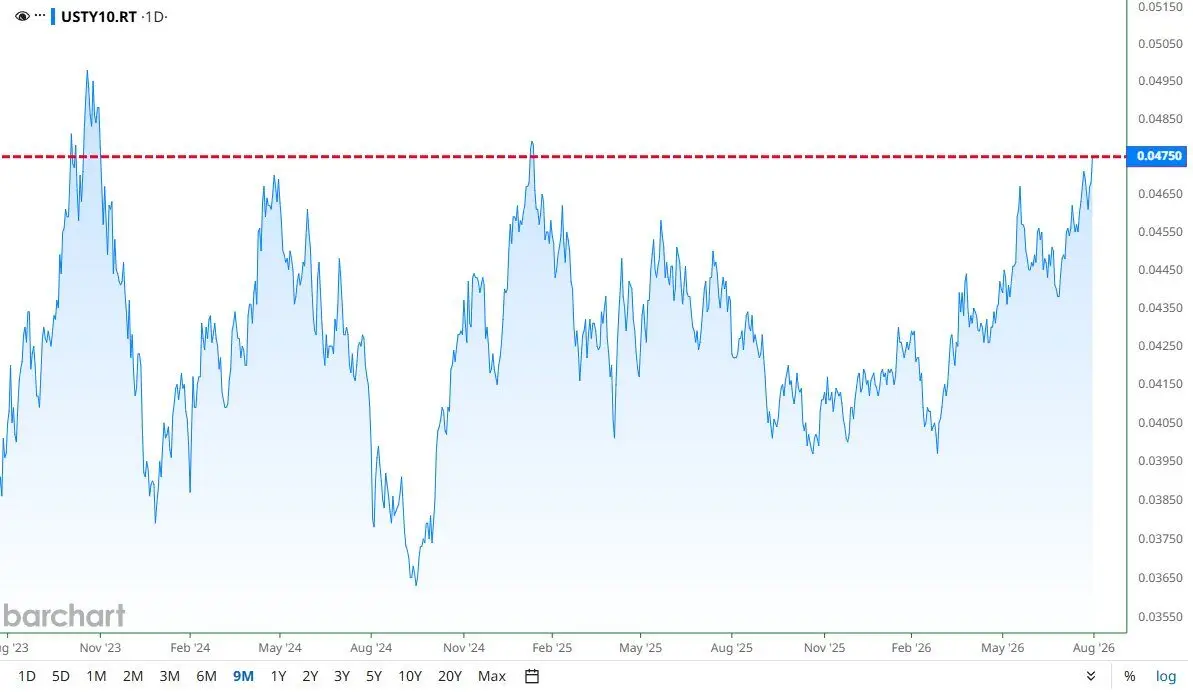
Normally a soft jobs report pulls bond yields lower, because weak hiring is exactly the kind of evidence that gives a central bank room to cut. On Wednesday, that link broke. ADP reported the slowest month of private hiring since January, and the 10-year Treasury yield rose anyway, punching through the 4.75% level that had capped every rally for the better part of two years to print 4.81%. Equities, caught between a labor market that argues for lower rates and an oil price that argues for higher ones, simply stalled.
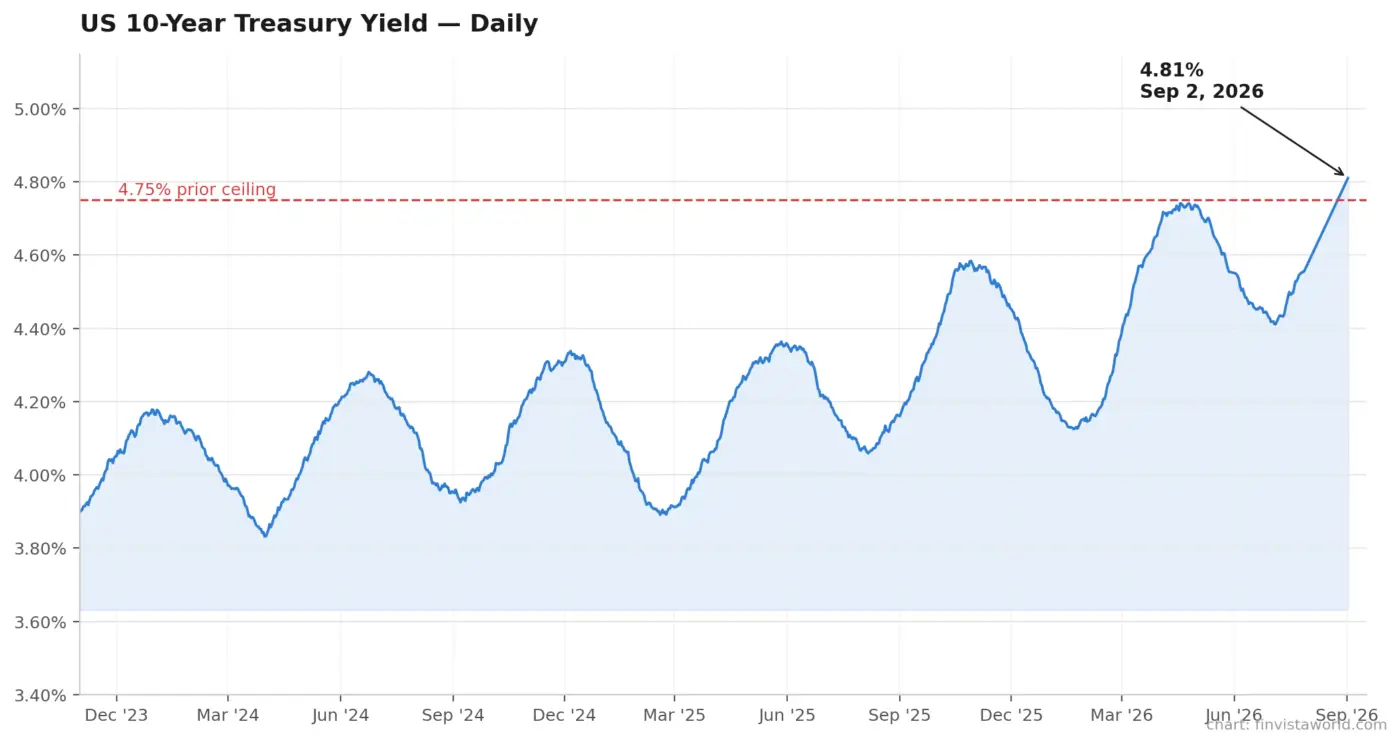
The ADP miss that should have calmed yields — but didn’t
Private employers added just 38,000 jobs in August, according to ADP, well short of the 47,000 economists had expected and a step down from July’s already-revised 46,000. ADP’s own framing was blunt: it was the weakest hiring month since January. In a typical cycle, a print like that would be read as confirmation that the labor market is cooling enough for the Federal Reserve to ease off. Instead, Treasury yields extended their climb through the release, a sign that traders are currently weighting oil-driven inflation risk more heavily than labor-market softness when they price the path of rates.
Where the jobs went missing
The sector detail explains why the headline number landed softer than the sentiment around it might suggest. Education and health services added 45,000 jobs, effectively the entire net gain on its own, with leisure and hospitality contributing another 16,000. Working against that, manufacturing shed 17,000 positions and professional and business services cut 16,000 — the parts of the economy most exposed to higher input costs and to the productivity effects of AI adoption. By company size, large employers with 500 or more staff added 34,000 jobs and the smallest firms added 20,000, but businesses in the 20-to-49-employee range cut 17,000, pointing to real strain in the middle of the small-business segment rather than a broad-based freeze.
ADP chief economist Nela Richardson tied the wage picture to the same story: “Pay can tell us a lot about today’s choppy hiring,” she said, noting that once-predictable wage growth has been overtaken by “the complexities of demographic change, persistent inflation, and AI’s effects on jobs.” The report lands two days ahead of the Bureau of Labor Statistics’ official nonfarm payrolls release on Friday, which carries far more weight for the Fed’s September decision — but it set the tone for a session in which nothing traded on a single, clean narrative.
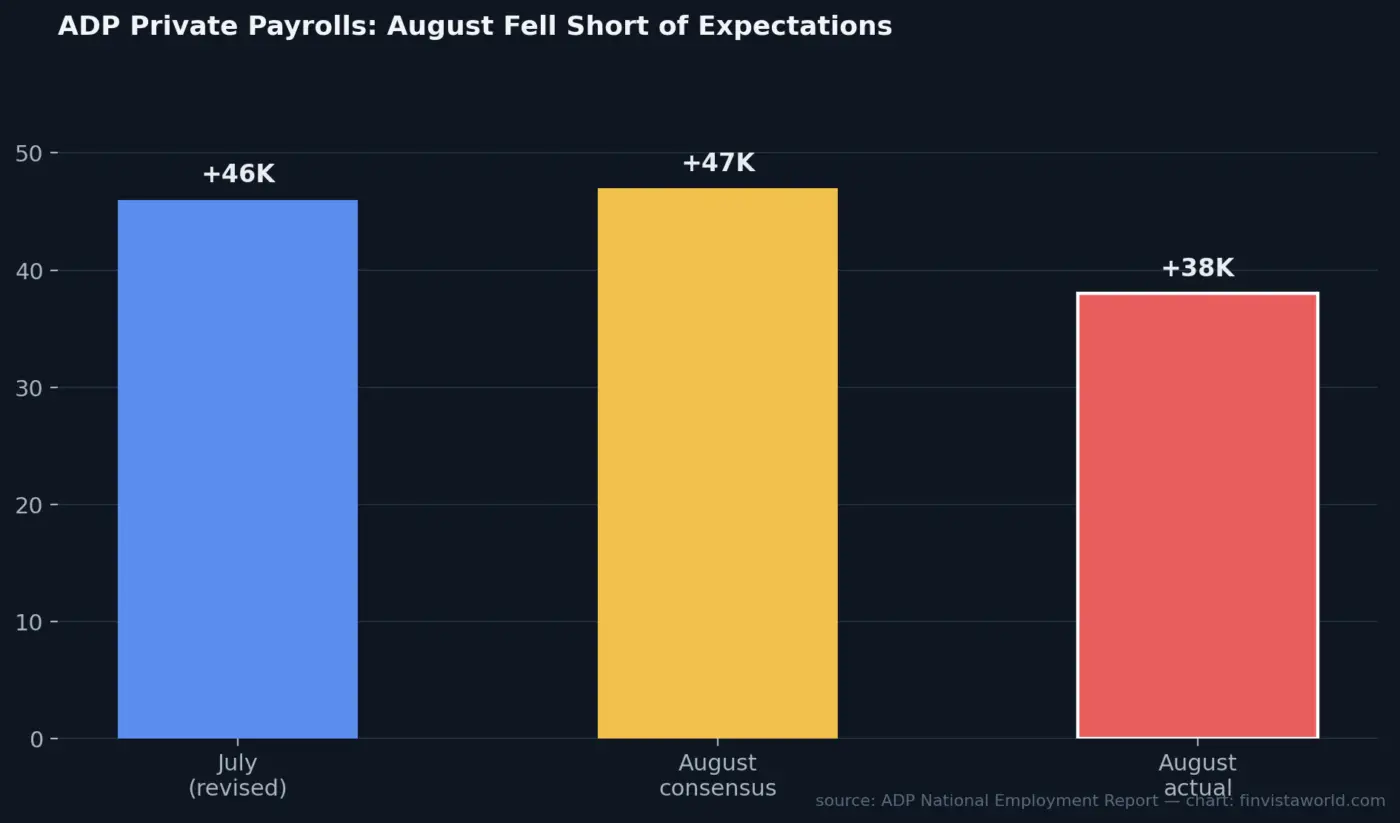
The 10-year yield breaks its own ceiling
The bond market told the more consequential story. The 10-year Treasury yield rose to roughly 4.81%, moving decisively above the 4.75% line that had acted as a ceiling on every rally since November 2023 — the same level this site flagged as the market’s line in the sand back in early August. The 2-year yield held near 4.40%, a smaller move that reflects near-term Fed uncertainty rather than a full repricing of policy. A weak jobs report normally compresses that curve from the short end down; this time the long end did the moving, which is a term-premium story about inflation and fiscal risk more than it is a story about the Fed’s next meeting.
Stocks stall in the middle
Equity futures reflected the tug-of-war rather than resolving it. Dow futures added about 0.23%, S&P 500 futures were roughly flat at +0.07%, and Nasdaq 100 futures slipped 0.11%, with the Russell 2000 up 0.14%. SPY traded near $762.86 and QQQ near $707.86, both barely changed. Earnings did more to move individual names than the macro data did: Dell jumped 9.39% after beating estimates and raising guidance, while MongoDB fell 13.94% despite also beating on the headline numbers — a reminder that in a market this jumpy about rates, guidance and multiple compression can matter more than the beat itself. Palo Alto Networks eased 1.73% and Broadcom was little changed, down 0.20%.
Oil, gold and the dollar are still trading the Iran risk
Away from jobs and yields, commodities kept pricing the Hormuz disruption this site covered earlier in the week. Brent crude added 0.55% to $95.17 a barrel and WTI rose 0.25% to $90.46, both still carrying the geopolitical premium built up since the weekend strikes. Gold slipped 0.32% to about $4,314.59 an ounce, giving back a little ground as the firmer dollar — the Dollar Index rose 0.09% to 99.77 — made bullion marginally more expensive for foreign buyers. None of these moves were large; all of them are consistent with a market still waiting for the Hormuz standoff to either de-escalate or harden.
Bitcoin stays soft
Bitcoin fell 1.20% to about $76,887, extending the pattern from earlier in the week. With Treasury yields climbing rather than falling, the opportunity cost of holding a non-yielding asset keeps rising too, and crypto has had little reason to decouple from that pressure.
Market takeaway
The cleanest way to read Wednesday is that two Fed arguments are now running at full strength at the same time. The labor market, via ADP, is making the case for a rate cut. Oil, via Iran, is making the case for a hike, or at least for holding firm. Until Friday’s official payrolls report and the September Fed meeting force a resolution, expect exactly this kind of session to repeat: yields grinding higher on inflation risk even as jobs data softens, equities drifting sideways as they wait for clarity, and individual earnings doing more to move stocks than the macro backdrop. The 4.75% line that mattered all summer has already been breached — the next question is whether 4.81% holds, or whether the bond market has more room to run before the picture clears.
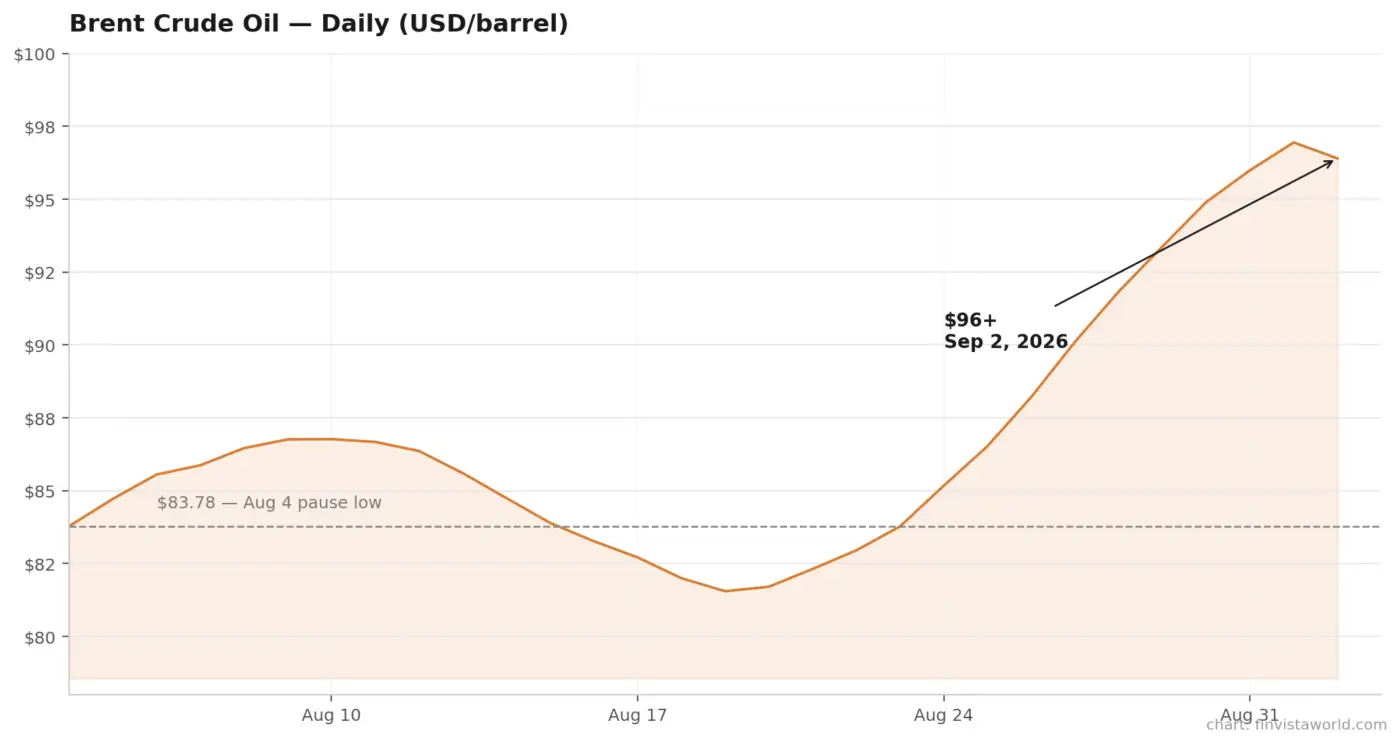 Iran War Reignites: Oil Tops $96, Stocks and Gold Slide Together as Fed Rate-Hike Odds Hit 70%
  Oil Sinks 6%, Dow Hits Record High as Iran Pause Reprices Markets – Crypto Sits It Out
  10-Year Yield Hits 4.75%, an 18-Month High – Why the Bond Market Is About to Revolt
  Bond Market Puts Warsh’s 2% Promise to the Test as 30-Year Yield Hits 19-Year High
  Fed Holds Rates Steady at July 2026 Meeting as Three Officials Dissent, Stocks Tumble
  Canada Keeps AA+ Rating as Fitch Highlights Weak Growth, High Debt and Strong Public Assets