
For a few weeks this summer, markets had a script: a pause in the US-Iran standoff sent oil lower and stocks to records. That script just got torn up. Fresh weekend strikes reopened the conflict, and this time nothing is behaving the way risk-on or risk-off usually would. Oil is spiking on war fear, which is normal. But stocks, gold, silver and Bitcoin are all falling at the same time, which is not. The common thread running through every asset class this week is not Iran itself — it’s the Federal Reserve.
What happened over the weekend
US forces struck Iranian Revolutionary Guard targets and mine-laying vessels that had been harassing shipping in the Strait of Hormuz. Iran responded on two fronts: rocket and drone attacks on US bases in the region, and strikes on two oil tankers transiting the Strait itself. Iran’s military command warned that “the continuation of American evil in the region will be met with heavier, more widespread, and devastating responses.” President Trump countered that the US now holds near-total control of Hormuz and claimed Iran’s economy is collapsing under the pressure, while warning of “harder” retaliation if Tehran escalates further.
Ship-tracking data shows the standoff is already choking traffic through one of the world’s most important chokepoints. Kpler recorded just four tanker crossings on Tuesday, against a ten-day average of 13. Windward’s numbers were similar — four tankers entering and three exiting, with several transits logged in “dark mode,” meaning vessels switched off their transponders to avoid being targeted. US Energy Secretary Chris Wright put Monday’s flow at 17 million barrels, but analysts at ING flagged a widening gap between official figures and independent ship-tracking estimates, and cautioned that any single day’s number is noisy — the trend across the tracking services is what matters, and it points firmly downward.
Oil did what oil does in a supply scare
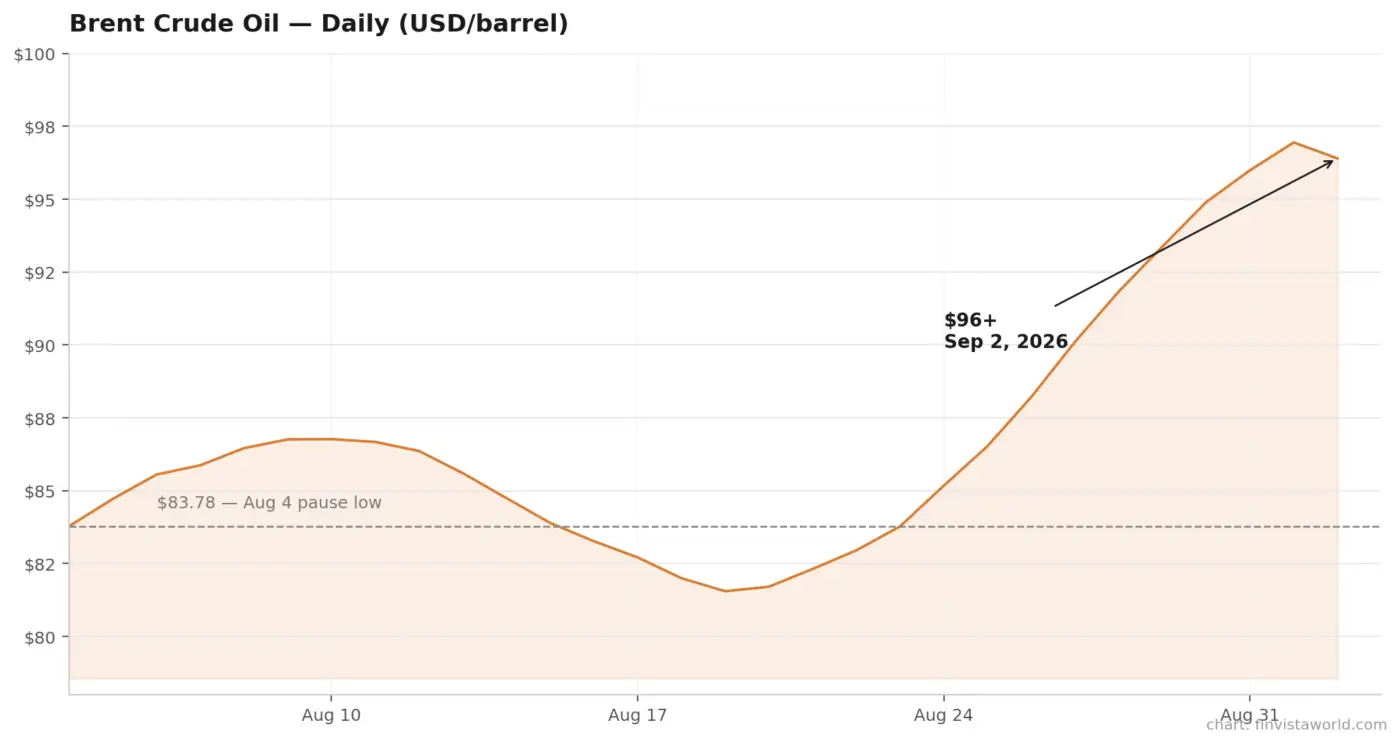
Brent crude topped $96 a barrel and WTI traded above $90, both up more than 4% on the week, as traders priced in a real chance that a significant share of Hormuz-transiting supply — roughly a fifth of global oil consumption passes through the strait — stays disrupted for longer than a few days. Unlike the July pause, when prices gave back their entire risk premium in a single session, this move has kept building through the week as tanker data confirms the disruption is real rather than rhetorical.
Where the script broke: everything else fell too
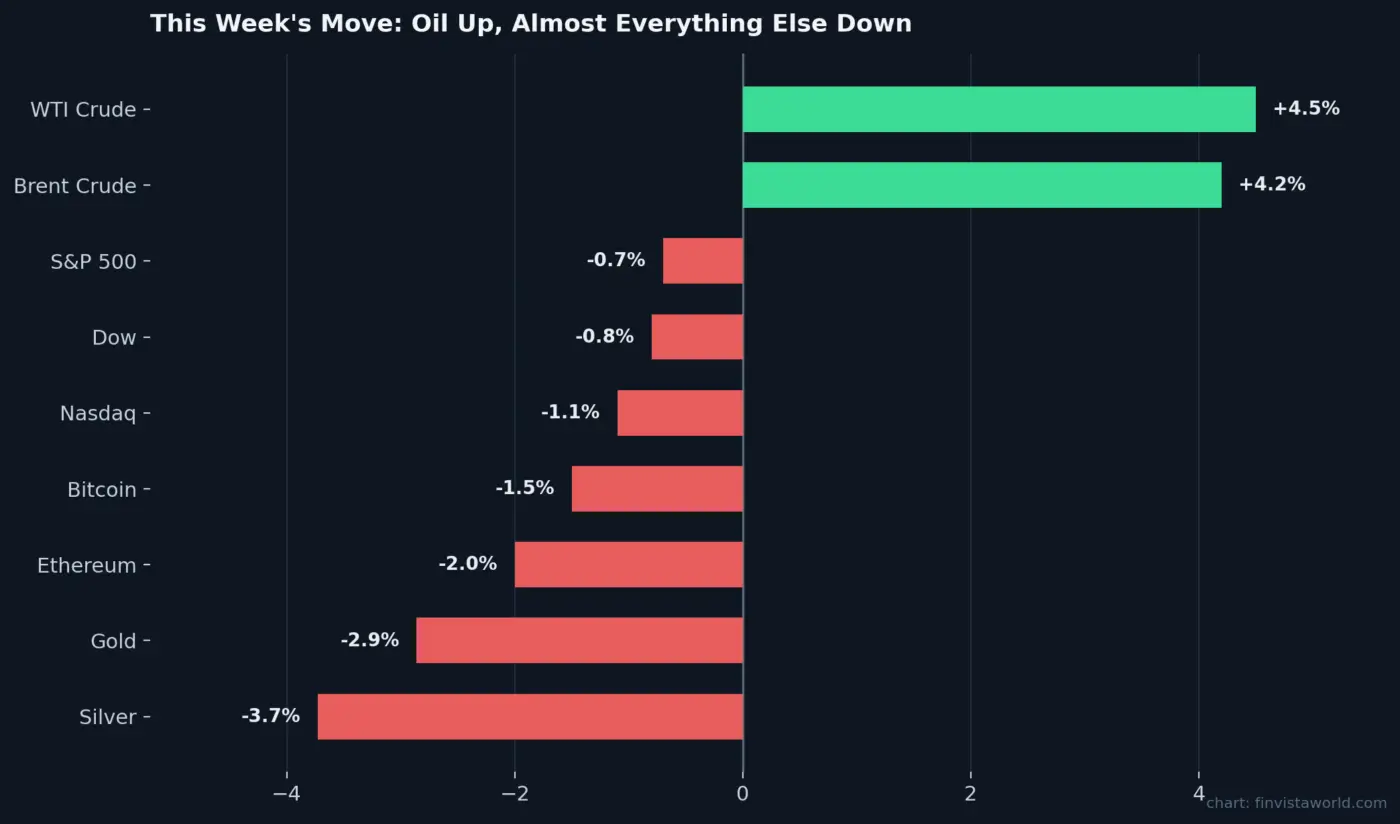
In a classic risk-off session, equities sell off, yields fall as investors seek safety in bonds, gold rallies, and the dollar strengthens. This week delivered only two of those four. The Dow fell about 0.8%, the S&P 500 dropped roughly 0.7%, and the Nasdaq led declines with a fall of more than 1%, dragged lower by megacap technology names most sensitive to the cost of money. Futures pointed to more of the same, with S&P contracts near 7,625.75, Dow futures around 52,758, and Nasdaq futures off about half a percent.
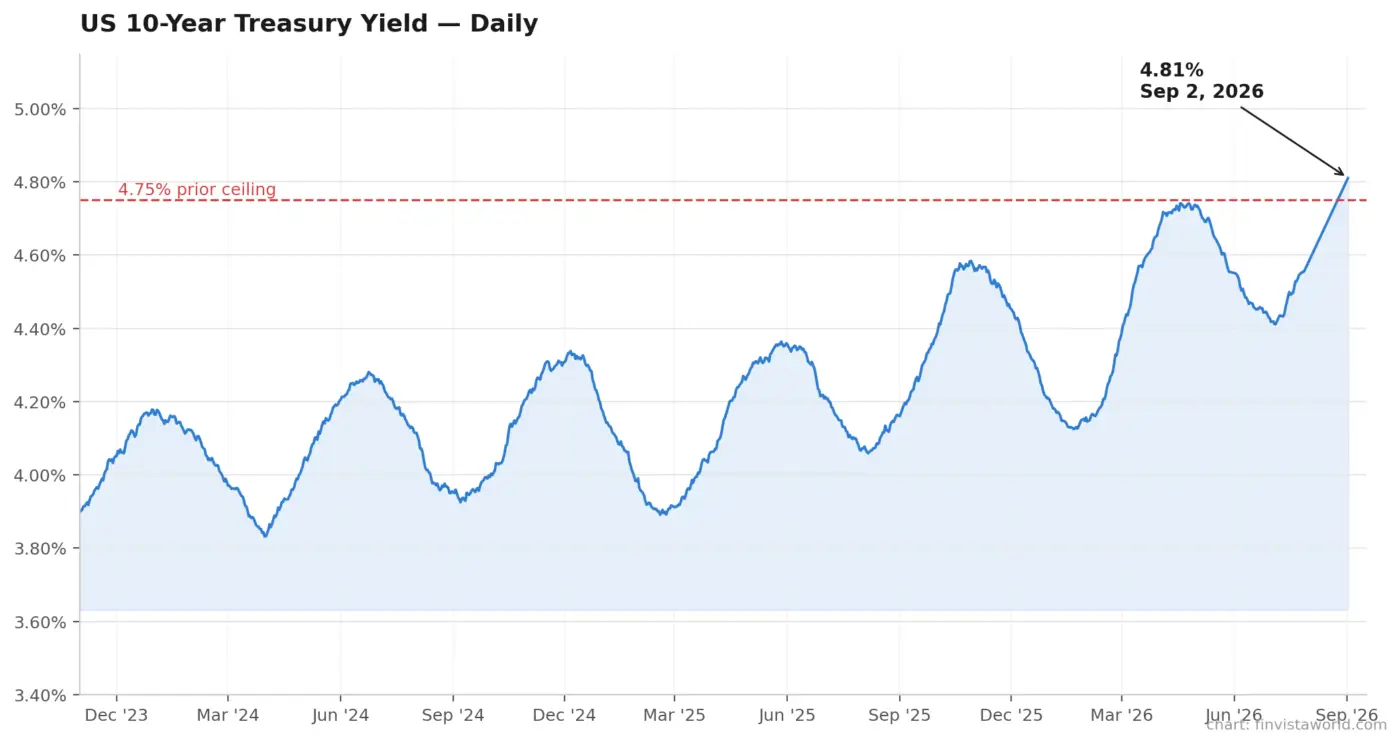
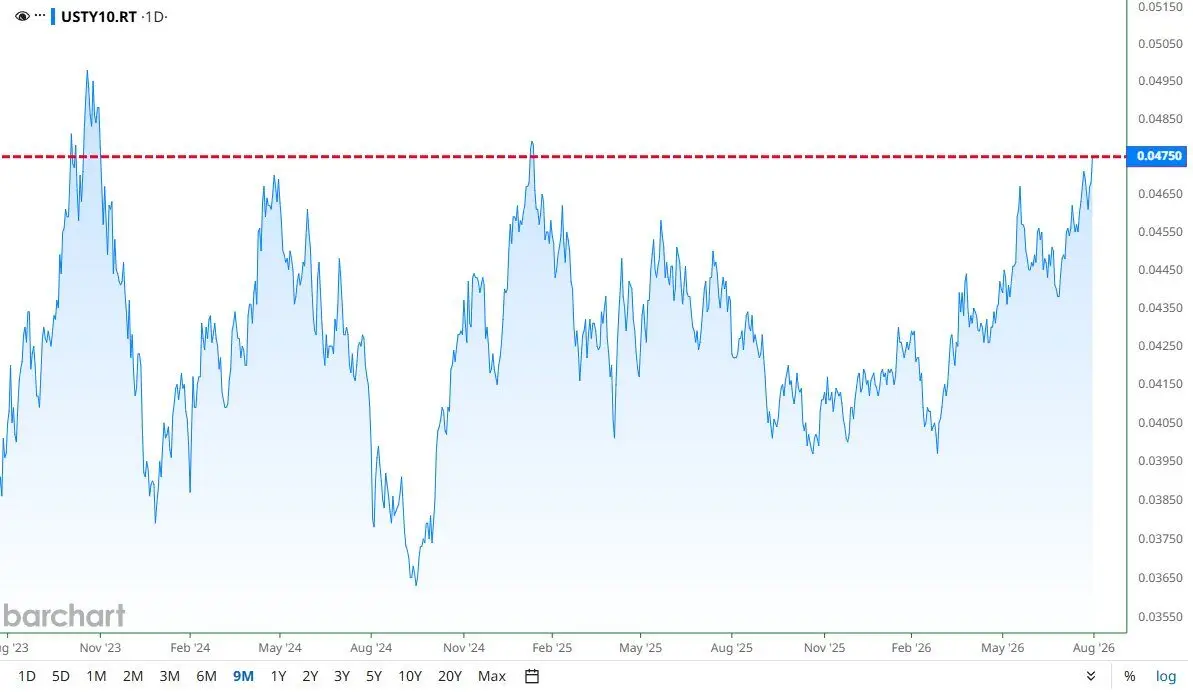
But Treasury yields rose instead of falling. The 10-year yield climbed to roughly 4.79%, its highest level since January 2025, while the 30-year pushed up to about 5.27%, close to multi-decade highs. The 2-year sat near 4.35–4.39%. That is not a flight-to-safety pattern — it’s a market bracing for tighter monetary policy.
The reason is the Fed, not the war itself
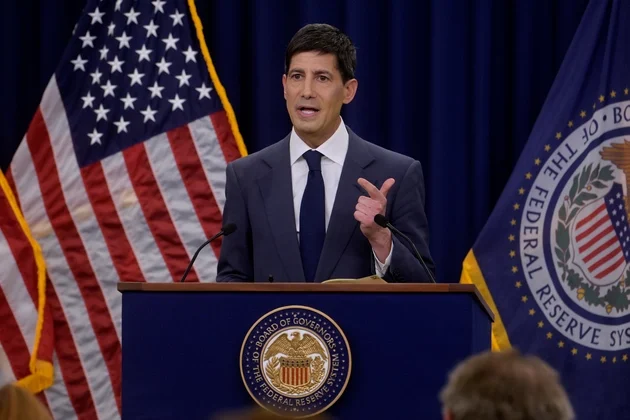
Rising oil prices feed directly into headline inflation, and Fed Chair Kevin Warsh has been notably hawkish in recent commentary. Deutsche Bank now calls a rate hike the “most likely policy outcome” of the Fed’s September meeting, and market-implied odds of that hike have climbed to roughly 70%. That single number explains why gold and silver — the assets most people would expect to catch a geopolitical bid — did the opposite. Gold settled at $4,325 an ounce, down 2.86% and back below the $4,400 level it had held earlier in the week. Silver fell harder, closing at $64.13, down 3.73%, a reminder that silver’s heavier exposure to industrial demand and its higher beta to rate expectations tend to amplify moves in either direction. A firmer dollar, buoyed by the same rate-hike odds, made both metals more expensive for foreign buyers and added to the pressure.
Crypto took the same hit as gold, for the same reason
Bitcoin opened the week at $77,395.89 and slid to around $76,597, down roughly 1.5% on the day and matching its weekly decline. Ethereum fell further, from $2,417.66 to about $2,373.76, down 2% on the day. Both remain sharply higher on the month — Bitcoin up more than 23%, Ethereum up over 31% — but both are still deeply negative for the year. The logic is the same one hitting gold: crypto pays no yield, so every basis point added to the expected path of interest rates makes holding it relatively more expensive versus cash and short-term Treasuries. When rate-hike odds jump from a coin flip to 70% in the space of a week, non-yielding assets get repriced downward almost mechanically, regardless of what else is happening in the world.
Market takeaway
This week is the mirror image of the Iran pause that briefly sent the Dow to a record high and oil sinking 6% in a single session. Back then, a de-escalation removed a risk premium and let each asset move on its own logic — equities up, oil down, gold still bid as insurance, crypto indifferent. This time, escalation is adding an oil-driven inflation shock on top of an already-hawkish Fed, and that combination is dragging stocks, gold, silver and crypto down together even as oil itself spikes. The question that will decide the next leg isn’t really about Hormuz — tanker data will keep telling that story day by day. It’s whether the incoming inflation and labor data before the September Fed meeting confirms the 70% rate-hike odds now priced into markets, or gives Warsh and the rest of the committee a reason to hold off. Until that’s resolved, expect oil to keep trading on shipping headlines while everything else trades on the Fed.
 ADP Jobs Miss Collides With Rising Yields: Wall Street Stalls as 10-Year Hits 4.81%
  Oil Sinks 6%, Dow Hits Record High as Iran Pause Reprices Markets – Crypto Sits It Out
  10-Year Yield Hits 4.75%, an 18-Month High – Why the Bond Market Is About to Revolt
  Bond Market Puts Warsh’s 2% Promise to the Test as 30-Year Yield Hits 19-Year High
  Fed Holds Rates Steady at July 2026 Meeting as Three Officials Dissent, Stocks Tumble
  Canada Keeps AA+ Rating as Fitch Highlights Weak Growth, High Debt and Strong Public Assets