
Fitch has reaffirmed Canada’s AA+ sovereign rating with a stable outlook, but the decision also highlights a familiar tension for investors: Canada still has a strong balance-sheet cushion, while growth, productivity and public debt remain under pressure.

Fitch keeps Canada near the top tier
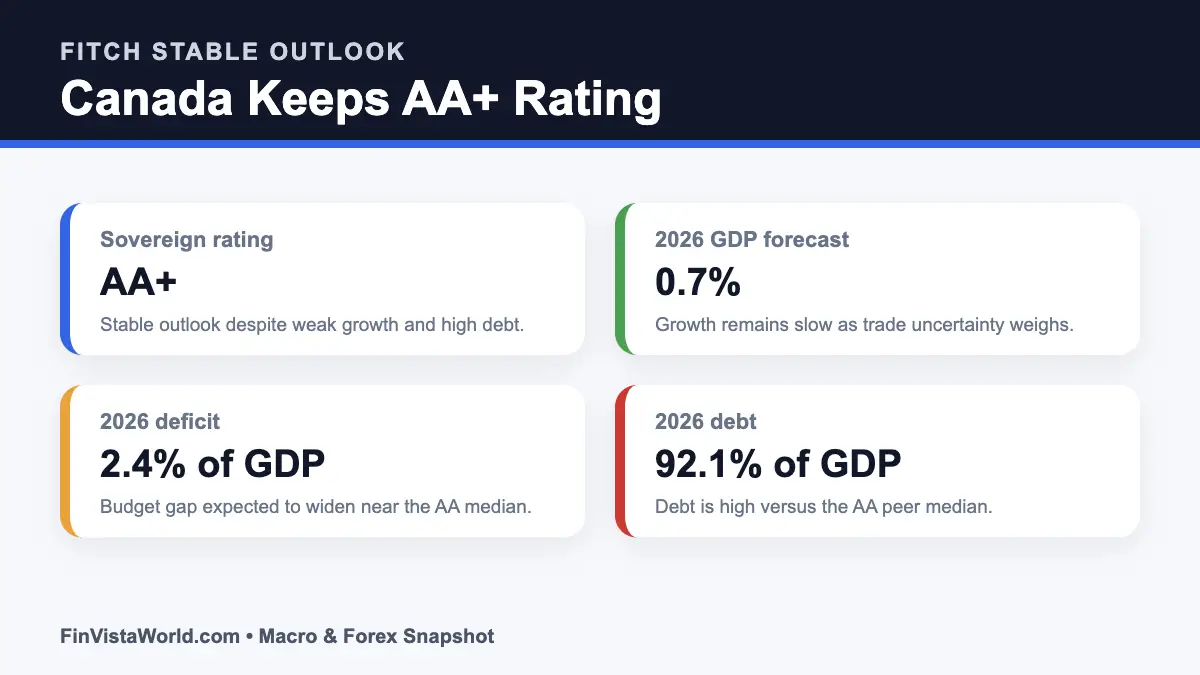
Fitch Ratings kept Canada’s long-term sovereign rating at AA+ and maintained a stable outlook. For markets, the headline is not a shock. Canada remains one of the stronger-rated developed economies, and the stable outlook means Fitch does not currently see a near-term reason to move the rating lower or higher.
Still, the details matter. The agency’s assessment paints a mixed picture: Canada’s fiscal and external buffers are still meaningful, but growth is weak, debt is elevated, and uncertainty around trade policy continues to limit business investment.
The macro story: weak growth, rising debt
Fitch’s view points to a slower Canadian economy in 2026. Growth is expected to remain modest, with real GDP forecast around 0.7%. That is far below the stronger pace seen in previous years and reflects several pressures hitting at the same time: softer productivity, trade uncertainty, investment hesitation and the adjustment costs linked to population growth.
The fiscal side is also becoming more difficult. Fitch expects Canada’s general government deficit to widen from roughly 1.7% of GDP in 2025 to around 2.4% in 2026. That level is not extreme for an AA-rated sovereign, but it shows that fiscal consolidation is not yet the main story.
The bigger concern is debt. Gross general government debt is projected to rise from about 89.7% of GDP in 2025 to 92.1% in 2026. Compared with the AA peer median, Canada’s debt ratio is high. In a simpler credit model, that would normally put more pressure on the rating.
Why the AA+ rating is still supported
The reason Fitch is still comfortable with Canada’s rating is that the country has important offsetting strengths. The most important is the asset side of the public-sector balance sheet. Canada’s general government financial assets are estimated at around 110% of GDP, while the Canada Pension Plan and Quebec Pension Plan hold large pension assets.
That matters because credit ratings are not only about debt. They are also about a government’s ability to absorb shocks. Large public financial assets, deep capital markets and strong institutions give Canada more room than the debt number alone would suggest.
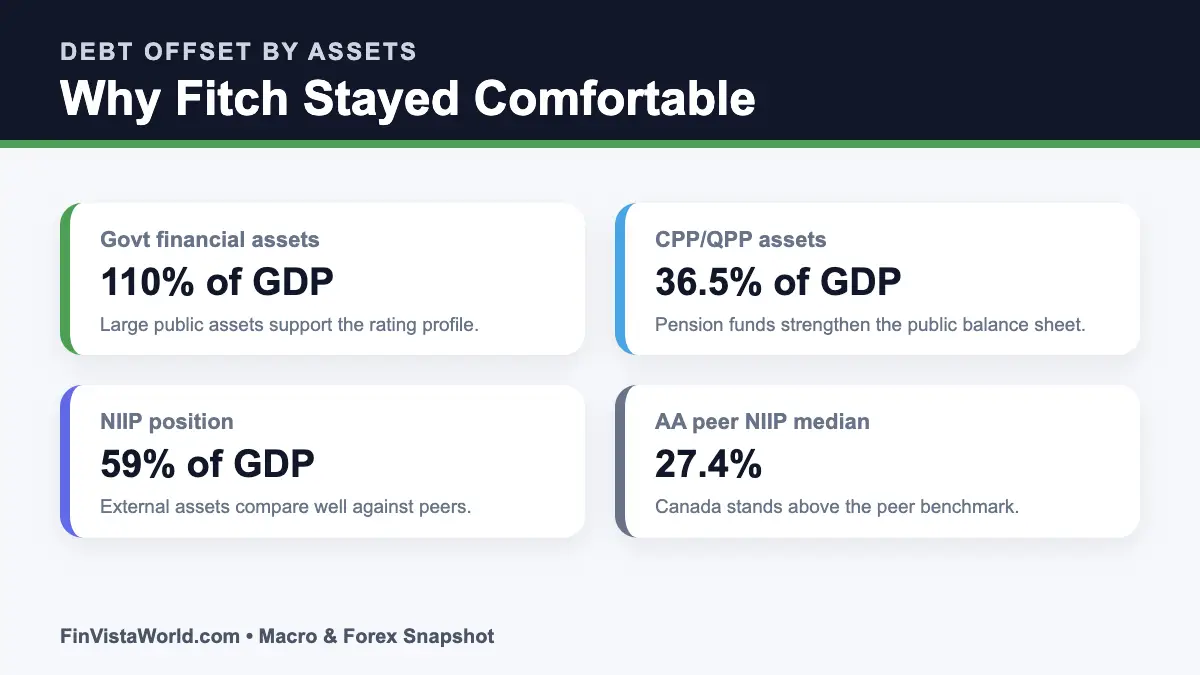
Canada’s external position is another positive factor. Fitch cited a strong net international investment position, supported in part by Canadian pension funds and institutional investors holding foreign assets, including U.S. equities. This helps explain why the rating can remain strong even when domestic growth looks underwhelming.
Trade uncertainty remains the key risk
For currency and macro traders, the trade-policy angle is especially important. Fitch noted uncertainty around the future of North American trade arrangements. While the base case is not a major break in trade relations, the uncertainty itself can still delay investment and reduce corporate confidence.
This is one reason the Canadian dollar may not react strongly to the rating decision itself. A stable AA+ rating is supportive, but it does not solve the bigger question facing Canada: can the economy generate stronger productivity and investment growth while keeping the fiscal path under control?
The Carney investment push faces a credibility test
Fitch also acknowledged the government’s plan to lift potential growth through capital spending and major infrastructure projects. The market will watch whether those plans translate into measurable productivity gains. Canada has heard productivity promises before, and rating agencies generally need evidence rather than ambition.
If infrastructure spending improves competitiveness and private investment follows, the outlook could become more constructive. If not, higher spending without stronger growth could leave the debt trajectory doing most of the talking at the next review.
What could change the rating?
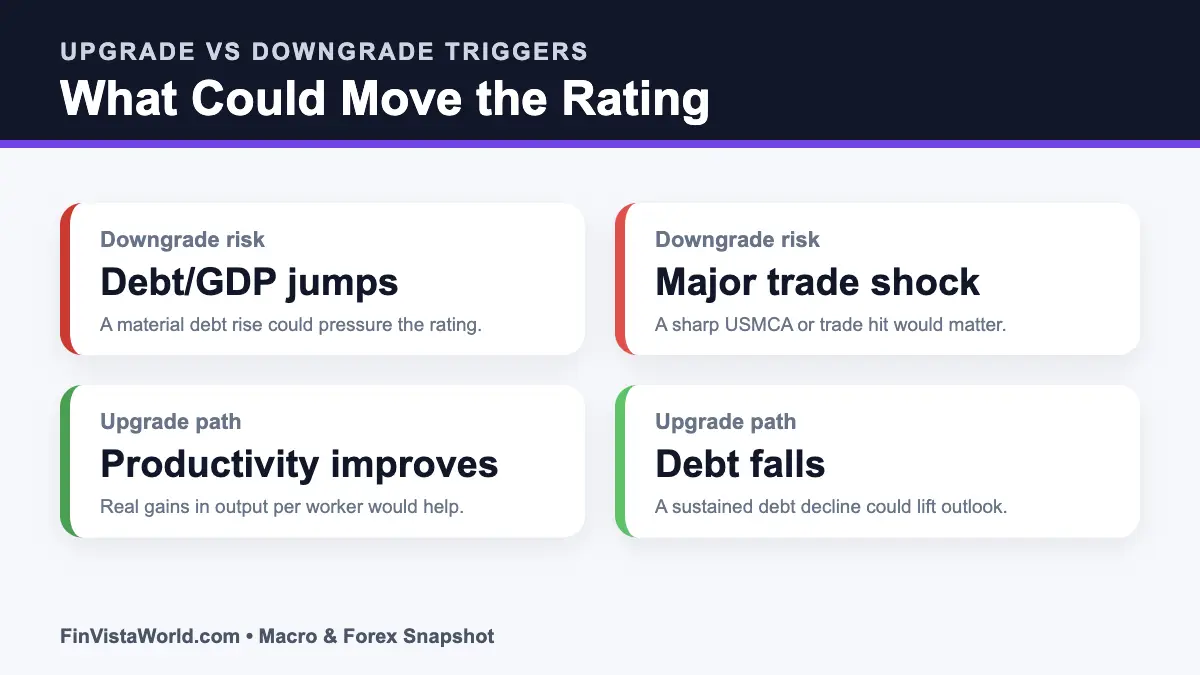
For now, Fitch’s stable outlook suggests neither an upgrade nor a downgrade is imminent. A downgrade conversation would become more serious if debt rises materially faster than expected or if Canada suffers a major trade shock that damages growth and fiscal revenue.
On the other side, an upgrade would likely require clear evidence of stronger productivity, better medium-term growth or a meaningful decline in debt relative to GDP. Those outcomes are possible, but they are not yet the base case.
Market takeaway for the Canadian dollar
For the loonie, the rating affirmation is more of a background signal than a fresh catalyst. It confirms that Canada’s sovereign credit profile remains strong, but it also underlines why investors may stay cautious. The country is being supported by assets, institutions and external strength, while the growth engine still needs to prove it can accelerate.
The practical takeaway is simple: Canada’s AA+ rating remains intact, but the next major move in market sentiment will probably come from growth data, trade negotiations, fiscal updates and whether the investment push can actually raise productivity.
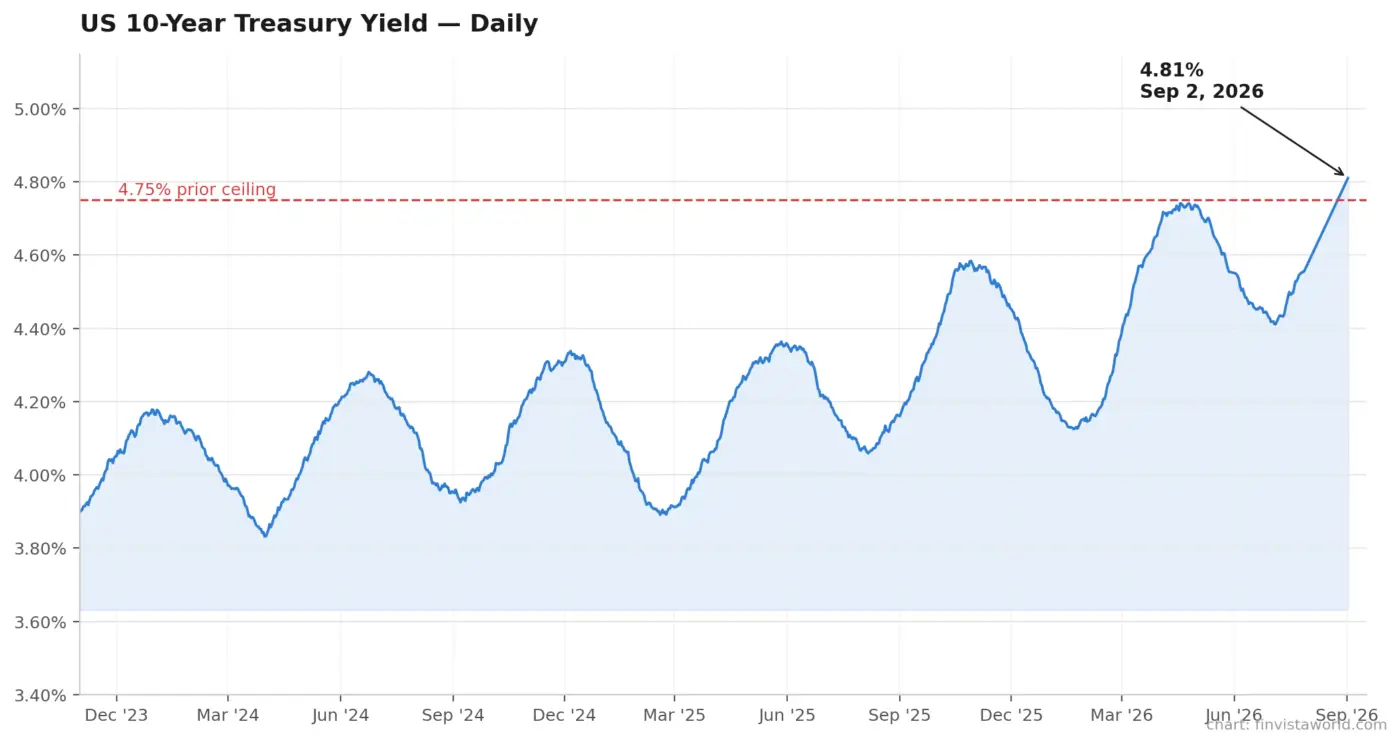 ADP Jobs Miss Collides With Rising Yields: Wall Street Stalls as 10-Year Hits 4.81%
 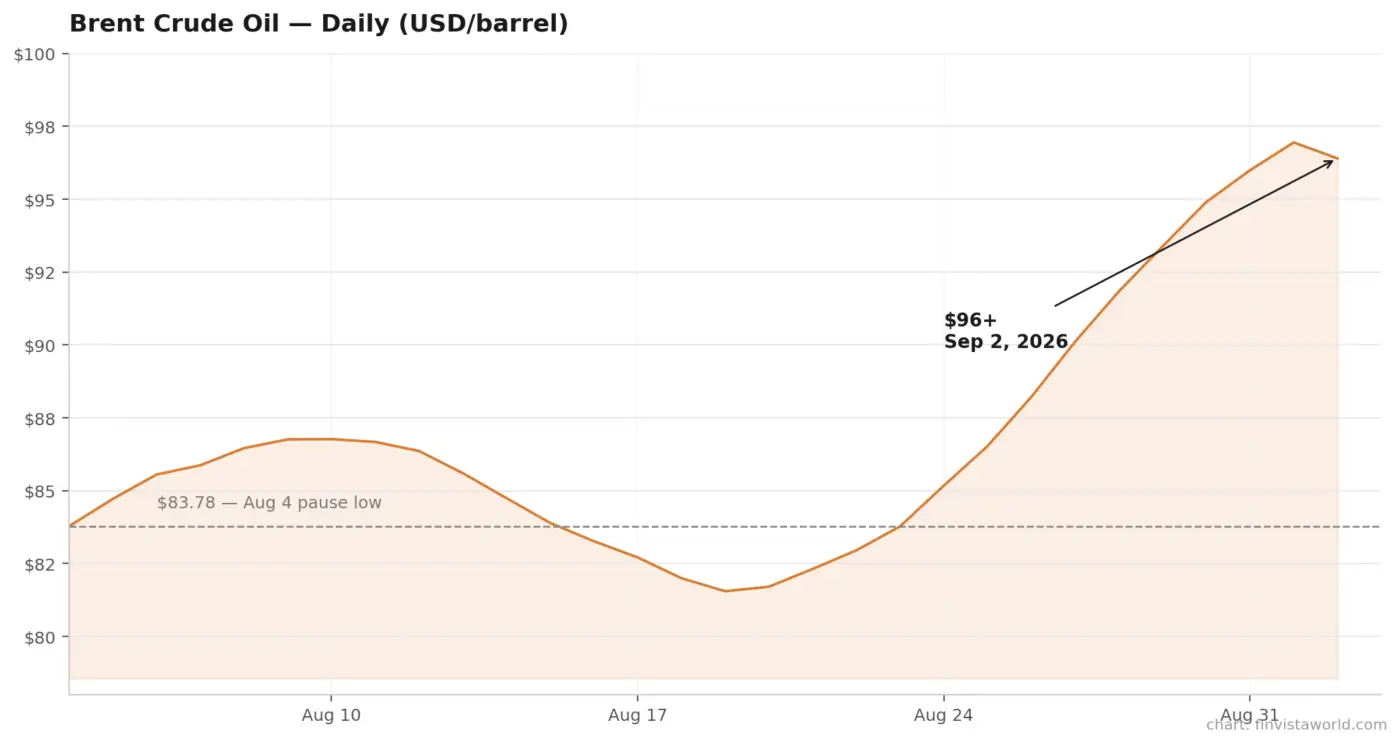 Iran War Reignites: Oil Tops $96, Stocks and Gold Slide Together as Fed Rate-Hike Odds Hit 70%
  Oil Sinks 6%, Dow Hits Record High as Iran Pause Reprices Markets – Crypto Sits It Out
 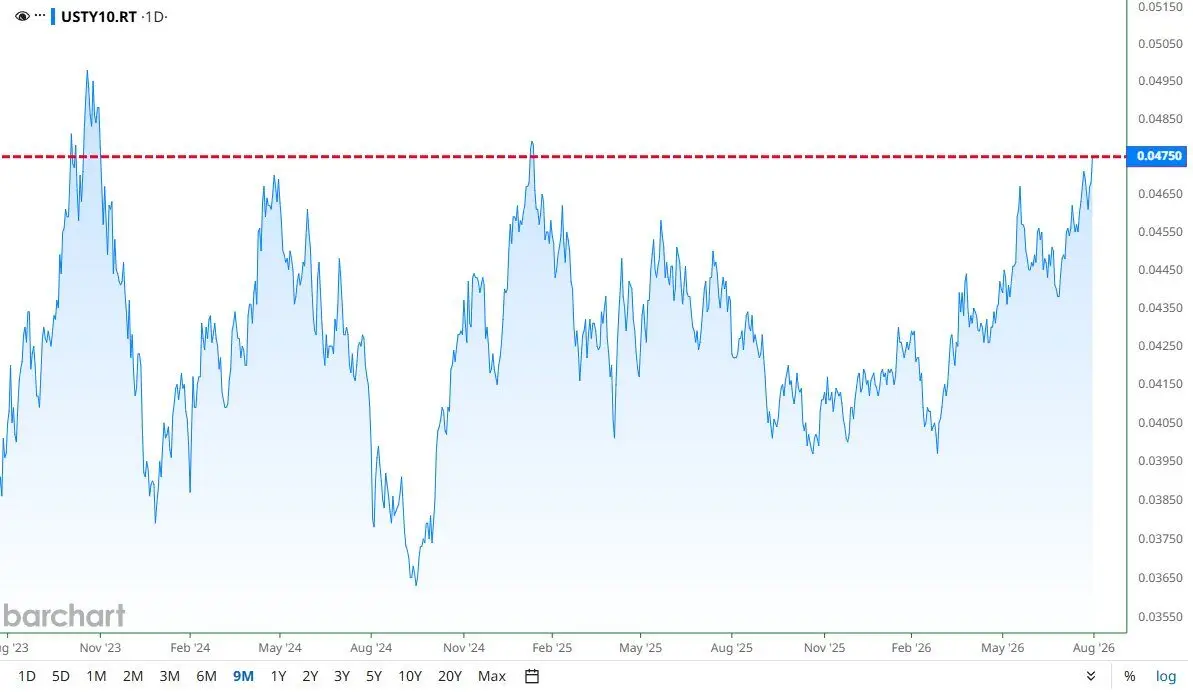 10-Year Yield Hits 4.75%, an 18-Month High – Why the Bond Market Is About to Revolt
  Bond Market Puts Warsh’s 2% Promise to the Test as 30-Year Yield Hits 19-Year High