
Binary options trading has long been one of the most polarizing instruments in the world of retail finance. At its core, a binary option is elegantly simple: you predict whether an asset’s price will be above or below a specific level at a specific time, and if you are right, you receive a fixed payout. If you are wrong, you lose your stake. But behind that simplicity lies a complex landscape of regulation, risk, broker quality, and trading strategy that separates consistent traders from those who rapidly lose their capital. In this comprehensive guide, we examine the state of the binary options market in 2026 — who the regulated players are, what assets you can trade, the different contract types available, and how to approach this market with the discipline required to have any chance of long-term success.
What Are Binary Options? A Clear Definition

Binary options derive their name from the binary (two-outcome) nature of the contract: at expiry, you either win a predetermined amount or lose your entire stake. There is no middle ground, no partial payout, and no ability to exit the trade early (on most platforms). This structure makes them fundamentally different from standard options contracts traded on major exchanges, where the profit or loss is variable and positions can be managed throughout their lifecycle.
A typical binary options trade might look like this: EUR/USD is currently trading at 1.0780. You believe it will be above 1.0780 in 15 minutes. You invest $100 on a “Call” option with a payout of 85%. If EUR/USD is indeed above 1.0780 at the 15-minute expiry, you receive $185 ($100 stake + $85 profit). If it is at or below 1.0780, you lose your $100.
The key mathematical reality that every binary options trader must internalize: with an 85% payout and 100% loss on losing trades, you need to win more than 54% of your trades just to break even. Achieving a consistently higher win rate requires genuine skill, discipline, and a robust trading methodology — and even then, the odds are structurally challenging.
The Regulatory Landscape for Binary Options in 2026

Binary options have had a troubled regulatory history. They were banned by the European Securities and Markets Authority (ESMA) for retail clients in Europe in 2018, and many jurisdictions worldwide have imposed restrictions due to widespread fraud and manipulation by unscrupulous brokers. However, 2026 sees a more nuanced picture, with a clear distinction between legitimate, regulated platforms and the offshore fraudulent operators that have given the industry a bad reputation.
Where Binary Options Are Legally Regulated
| Jurisdiction | Regulatory Body | Status | Key Requirements |
|---|---|---|---|
| United States | CFTC / NADEX | Legal (exchange-based only) | Must trade on CFTC-designated exchanges; OTC binary options banned |
| Cyprus / EU | CySEC | Banned for retail (B2B permitted) | ESMAban still in force for retail; institutional use limited |
| United Kingdom | FCA | Banned for retail | FCA ban permanent since 2019 |
| Australia | ASIC | Banned for retail | ASIC product intervention order in effect |
| Vanuatu / Seychelles / SVG | Various offshore regulators | Legal (offshore) | Lower regulatory standards; higher risk |
| Japan | FSA | Legal (registered brokers only) | Strict registration and capital requirements |
Nadex: The Gold Standard for US Traders
For US-based traders, Nadex (North American Derivatives Exchange) is the only CFTC-licensed binary options and spreads exchange. Unlike OTC binary options where you trade against the broker (creating a conflict of interest), Nadex operates as a genuine exchange where buyers and sellers are matched. This structure eliminates the most common forms of binary options manipulation — requotes, platform delays, and refusal to honor withdrawals — that plague unregulated brokers.
Asset Classes Available for Binary Options Trading

One of the genuine advantages of binary options is the breadth of markets accessible through a single platform. In 2026, the most actively traded binary options asset classes are:
Forex Binary Options
Major forex pairs (EUR/USD, GBP/USD, USD/JPY, AUD/USD, USD/CAD) are the most popular binary options underlying assets due to their liquidity, 24-hour trading availability, and abundance of market analysis. Binary options on forex pairs typically offer payouts of 70–92% for successful trades, with expiries ranging from 60 seconds to the end of the trading day.
Stock Index Binary Options
Indices like the S&P 500, NASDAQ 100, FTSE 100, DAX, and Nikkei 225 are popular for binary options traders who prefer to trade broader market direction rather than individual currency pairs. Index binary options tend to have slightly more predictable behavior around key technical levels than individual stocks.
Commodity Binary Options
Gold (XAU/USD) and crude oil (WTI and Brent) are the most actively traded commodity binary options. Gold in particular has seen heavy binary options volume in 2026 given its volatility around geopolitical events and Fed decisions. Silver, natural gas, and copper are also available on many platforms.
Cryptocurrency Binary Options
BTC/USD and ETH/USD binary options have become extremely popular in 2026, particularly given Bitcoin’s volatility around key support and resistance levels. Crypto binary options typically offer payouts of 80–95% on regulated platforms, with expiry times from 5 minutes to 24 hours.
Types of Binary Options Contracts
- High/Low (Up/Down): The most common type — predict whether the price will be above or below the strike price at expiry. Available on virtually every platform.
- Touch/No Touch: Predict whether price will touch a specific level before expiry (Touch) or fail to reach it (No Touch). Touch options typically offer higher payouts due to lower probability of success.
- In/Out (Boundary): Predict whether price will stay within a defined range (In) or break outside it (Out) by expiry. In options suit low-volatility environments; Out options suit high-volatility conditions.
- 60-Second Options: Ultra-short-term binary options with 60-second expiry. These are essentially gambling for most traders and are not recommended for those without extremely strong momentum reading skills.
- Ladder Options: Multiple strike levels at different payouts — higher strikes offer higher payouts but lower probability of success. Allows for nuanced positioning on expected price ranges.
Building a Binary Options Trading Plan
The majority of binary options traders lose money — not primarily due to bad luck, but due to the absence of a structured approach. A robust trading plan must address four components: asset selection, entry criteria, money management, and performance tracking.
Asset selection: Focus on 2–3 assets you know well and follow consistently. Attempting to trade every available market spreads your attention too thin and reduces the quality of your decision-making.
Entry criteria: Define in advance the exact conditions under which you will enter a trade. “The price looks like it’s going up” is not a valid criterion. “EUR/USD has pulled back to the 50-period EMA on the 15-minute chart, formed a bullish pin bar, and the RSI is recovering from oversold territory” is a valid criterion.
Money management: Professional binary options traders recommend risking no more than 2–5% of total account balance per trade. With a $1,000 account, this means maximum $50 per trade. This allows you to survive a losing streak of 20 consecutive trades — which, while unlikely with a sound strategy, is possible in markets.
Performance tracking: Keep a detailed trading journal recording every trade: asset, direction, expiry, entry rationale, outcome, and emotional state. After 100 trades, you will have statistically meaningful data about your win rate, most profitable assets, and weakest decision-making contexts.
Red Flags: How to Spot Fraudulent Binary Options Brokers
Unfortunately, the binary options space has attracted a significant number of fraudulent operators. Be extremely cautious of any broker displaying these warning signs:
- No verifiable regulatory license, or claims of regulation from a jurisdiction with no real oversight
- Unsolicited contact by phone or social media promising guaranteed returns
- Bonuses with impossible withdrawal conditions (e.g., “trade 50x the bonus before withdrawing”)
- Difficulty or delays when requesting withdrawals
- Platform manipulation — prices on the broker’s platform diverging from real market prices at expiry
- No physical address, no verifiable company registration
Always verify a broker’s license directly with the claimed regulatory authority’s official website before depositing any funds.
Frequently Asked Questions About Binary Options
Are binary options legal?
Binary options are legal in some jurisdictions (US via Nadex, Japan via FSA-registered brokers) and banned for retail clients in others (EU, UK, Australia). Their legality depends entirely on your country of residence and the regulatory status of the specific broker. Always verify before trading.
Can you make consistent money with binary options?
It is possible but genuinely difficult. You need a win rate consistently above 55–60% (depending on the payout percentage), strong money management, and the psychological discipline to follow a system even during losing streaks. The structural disadvantage of binary options (you lose 100% on losers but win only 70–92% on winners) means the statistical bar is high.
What is the minimum deposit for binary options trading?
Minimum deposits vary widely by platform. Offshore platforms like Pocket Option and Quotex allow accounts from as little as $10–$50. Nadex requires a minimum of $250. Professional recommendation: even if the minimum is low, never trade with less than $500 to allow adequate diversification of trades at responsible position sizes.
⚠️ Risk Disclaimer: Binary options trading involves a very high risk of capital loss. ESMA data indicates that 70–80% of retail binary options traders lose money. This content is for educational purposes only and does not constitute financial advice. Only trade with capital you can genuinely afford to lose, and always use a regulated platform.
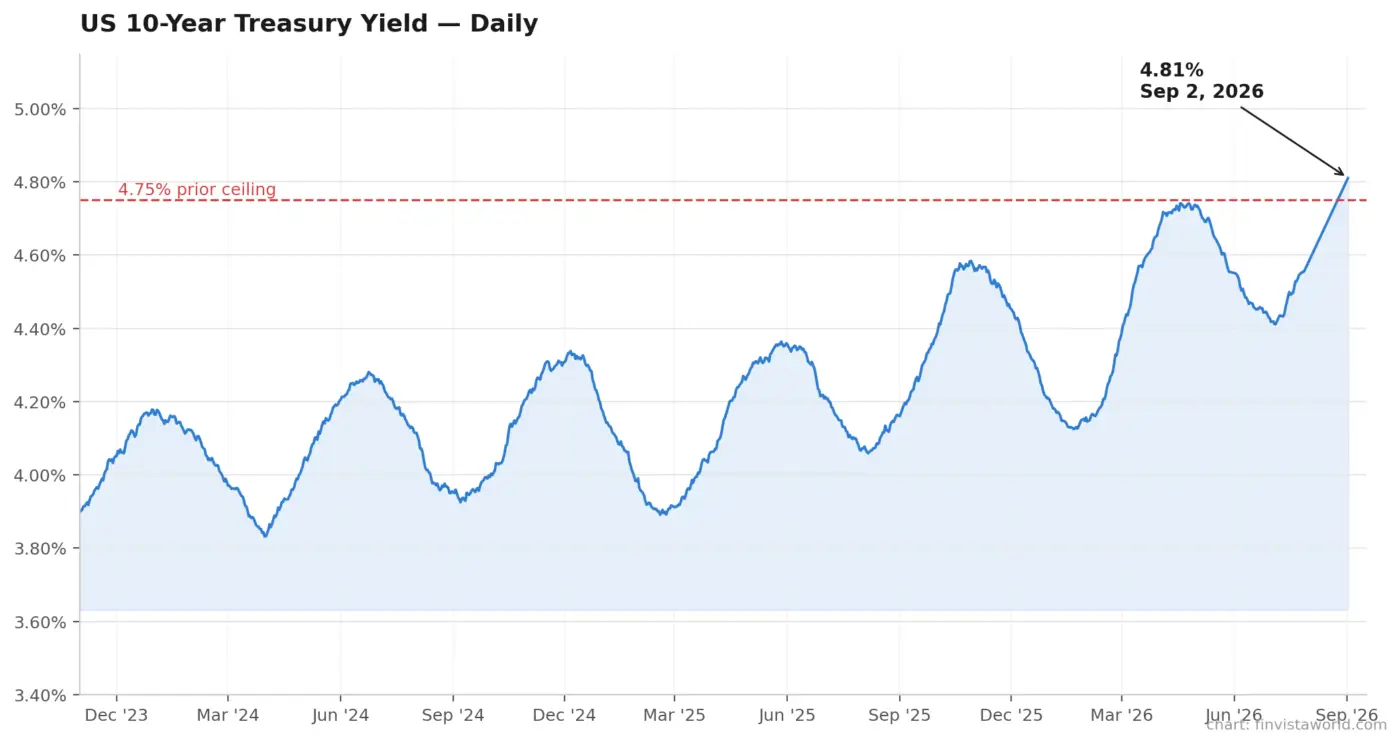 ADP Jobs Miss Collides With Rising Yields: Wall Street Stalls as 10-Year Hits 4.81%
 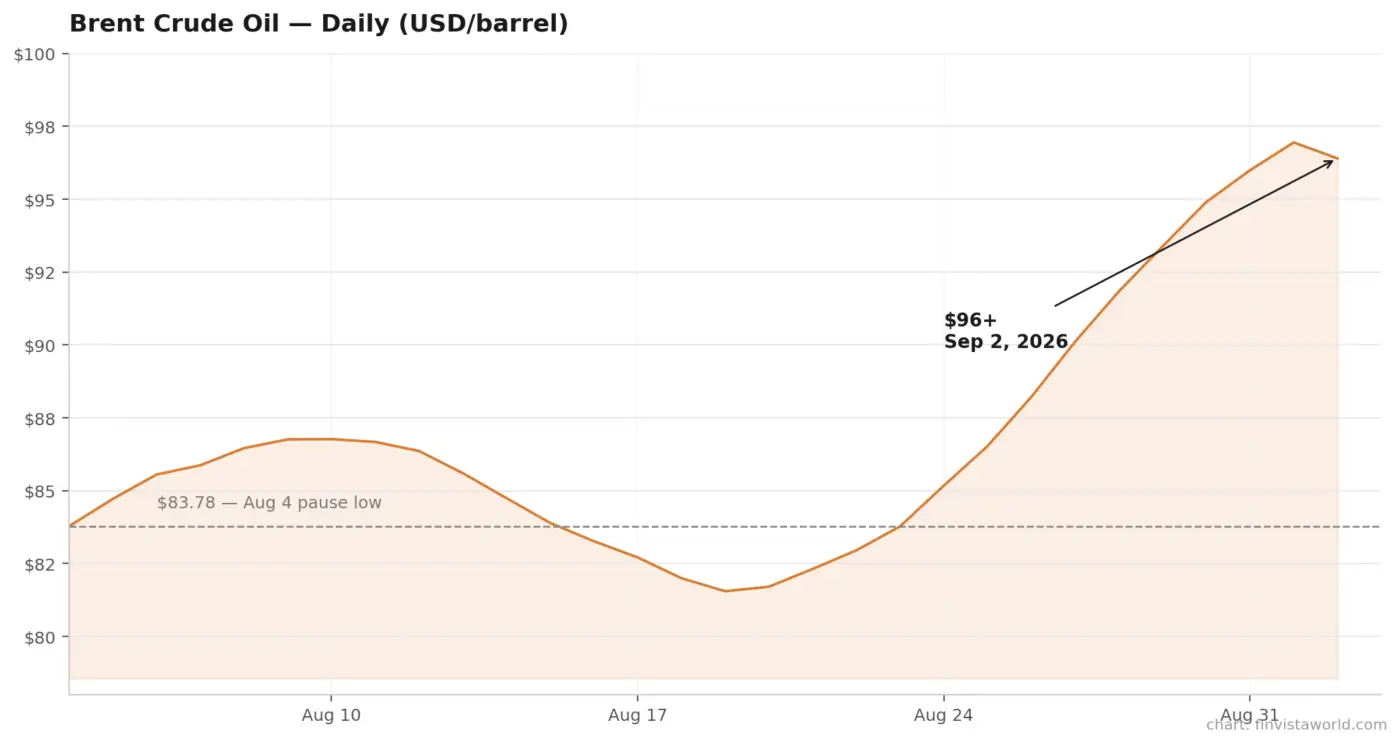 Iran War Reignites: Oil Tops $96, Stocks and Gold Slide Together as Fed Rate-Hike Odds Hit 70%
  Oil Sinks 6%, Dow Hits Record High as Iran Pause Reprices Markets – Crypto Sits It Out
 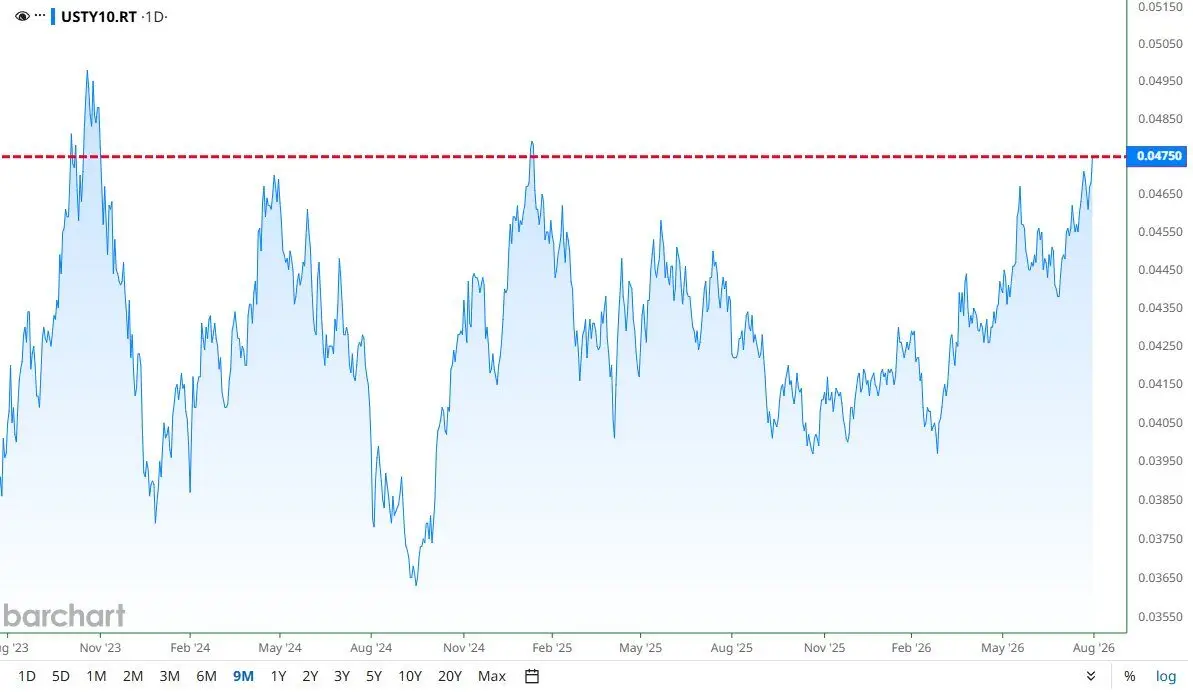 10-Year Yield Hits 4.75%, an 18-Month High – Why the Bond Market Is About to Revolt
  Bond Market Puts Warsh’s 2% Promise to the Test as 30-Year Yield Hits 19-Year High
 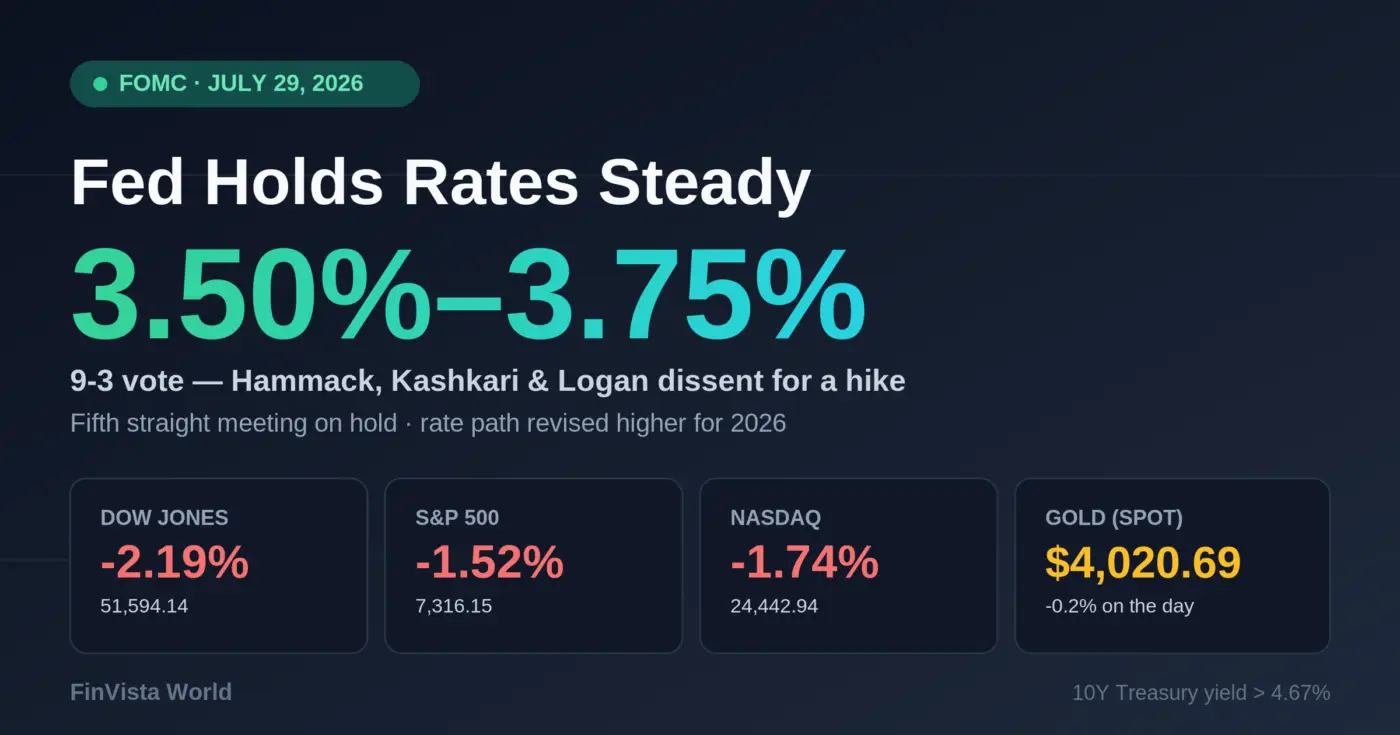 Fed Holds Rates Steady at July 2026 Meeting as Three Officials Dissent, Stocks Tumble