
The USD/CAD currency pair, commonly known as the “Loonie,” is one of the most liquid and widely traded pairs in the Forex market. In June 2026, the pair is navigating a complex macroeconomic landscape shaped by diverging central bank policies, oil price volatility, and shifting US-Canada trade dynamics. This in-depth analysis covers the key drivers, technical outlook, and trading strategies for USD/CAD traders.

What Drives the USD/CAD Exchange Rate?
Understanding the USD/CAD requires knowledge of the macroeconomic forces at play. Unlike most currency pairs, the Canadian dollar has a uniquely strong correlation with commodity prices — particularly crude oil, which accounts for a significant portion of Canada’s export revenue.
1. Crude Oil Prices (WTI & Brent)
Canada is one of the world’s largest oil exporters. When WTI crude oil rises, the Canadian dollar typically strengthens against the US dollar — pushing USD/CAD lower. Conversely, oil price drops weaken the CAD. In June 2026, oil is trading in the $78–$84 range, providing moderate support for the CAD.
2. Bank of Canada (BoC) Monetary Policy
The Bank of Canada has maintained a cautious stance in 2026. After cutting rates twice in Q1, the BoC paused in May, citing persistent core inflation and resilient labor markets. Governor Tiff Macklem has signaled that further easing depends on incoming CPI data. Markets are pricing in one more cut in Q3 2026.
3. Federal Reserve Policy Divergence
The US Federal Reserve held rates steady at its June meeting, reinforcing dollar strength. The Fed vs. BoC policy divergence — with Canada cutting ahead of the Fed — has been a key driver keeping USD/CAD elevated in the 1.36–1.39 range throughout 2026.
4. US–Canada Trade Relations
US–Canada trade tensions, particularly around auto tariffs and agricultural goods, have periodically weighed on the CAD. Any escalation in trade policy uncertainty tends to push USD/CAD higher as investors seek USD safety.

USD/CAD Technical Analysis — June 2026
From a technical perspective, USD/CAD has been consolidating in a well-defined range. Here’s the breakdown of key levels traders should watch:
| Level Type | Price Level | Significance |
|---|---|---|
| Strong Resistance | 1.3950 | 2026 year-to-date high, key ceiling |
| Immediate Resistance | 1.3820 | Recent swing high, 50-day MA |
| Current Price Zone | 1.3720–1.3780 | Consolidation range |
| Immediate Support | 1.3650 | 200-day MA, previous resistance |
| Strong Support | 1.3500 | Major psychological level, demand zone |
RSI: At 54, neutral — no overbought/oversold signals. MACD: Showing mild bullish momentum as the signal line crosses above zero. Bollinger Bands: Price is testing the upper band, suggesting potential resistance near 1.3820.

USD/CAD Forecast for June–July 2026
Our base case scenario for USD/CAD in June–July 2026:
- Bullish scenario (USD strength): If the Fed remains hawkish and oil drops below $75, USD/CAD could test 1.3900–1.3950. Key trigger: weak Canadian CPI or soft employment data.
- Bearish scenario (CAD recovery): If oil surges above $90 or BoC surprises with a hawkish hold, USD/CAD could pull back toward 1.3500. Key trigger: strong Canadian GDP or US slowdown data.
- Base case: Consolidation in the 1.3650–1.3850 range, with bias toward gradual USD strength.
Trading Strategies for USD/CAD
Range Trading Strategy
Given the current consolidation, range traders can look to buy near the 1.3650 support zone with stops below 1.3600, targeting 1.3820. This offers a favorable risk/reward ratio of approximately 1:3.
Breakout Strategy
A confirmed daily close above 1.3850 could trigger a breakout toward 1.3950. Traders using this approach should wait for volume confirmation and avoid entering on thin holiday sessions. Set stops at 1.3780 and target 1.3950–1.4000.
Oil-Correlated Strategy
Monitor WTI crude oil as a leading indicator. If oil drops 3%+ in a week, consider long USD/CAD positions. If oil rallies 5%+ on supply cuts, look for short USD/CAD opportunities near resistance.
Key Events to Watch — June/July 2026
- Bank of Canada Rate Decision (July 9): A surprise cut would weaken CAD significantly
- Canadian CPI (June 18): Above-expectation inflation could delay BoC cuts
- US NFP Report (July 3): Strong jobs data supports USD, pushing pair higher
- WTI Crude Oil Inventory Reports (Weekly): Drawdowns support CAD; builds weaken it
- OPEC Meeting (Late June): Any production cut announcement would boost oil and CAD
Frequently Asked Questions (FAQ)
What is the best time to trade USD/CAD?
The best trading window for USD/CAD is during the overlap of the London and New York sessions (1:00 PM – 5:00 PM GMT). This is when liquidity is highest and spreads are tightest. Key Canadian economic releases typically come out at 12:30 PM GMT (8:30 AM EST).
Why does oil affect the Canadian dollar?
Oil represents roughly 15–20% of Canada’s total export value. Higher oil prices increase Canada’s export revenues and foreign exchange inflows, strengthening the CAD. Canada’s largest oil sands reserves make it one of the world’s top 5 oil exporters, creating this strong correlation.
Is USD/CAD a good pair for beginners?
Yes — USD/CAD is considered beginner-friendly due to its tight spreads, high liquidity, and relatively clear fundamental drivers (oil prices + central bank policy). The pair also tends to trend more predictably than exotic pairs.
Risk Disclaimer: Forex trading involves substantial risk of loss. USD/CAD analysis is for educational purposes only and does not constitute financial advice. Past performance does not guarantee future results. Always use proper risk management and trade only capital you can afford to lose.
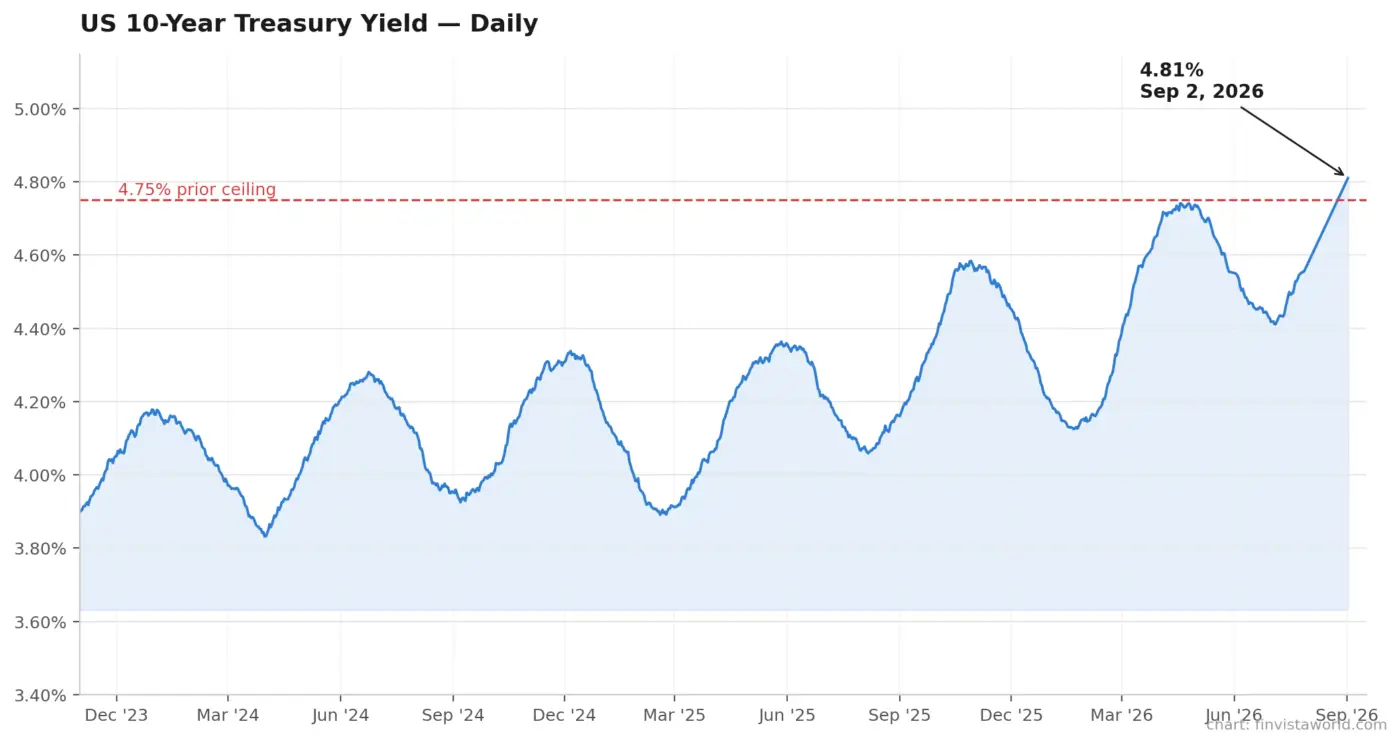 ADP Jobs Miss Collides With Rising Yields: Wall Street Stalls as 10-Year Hits 4.81%
 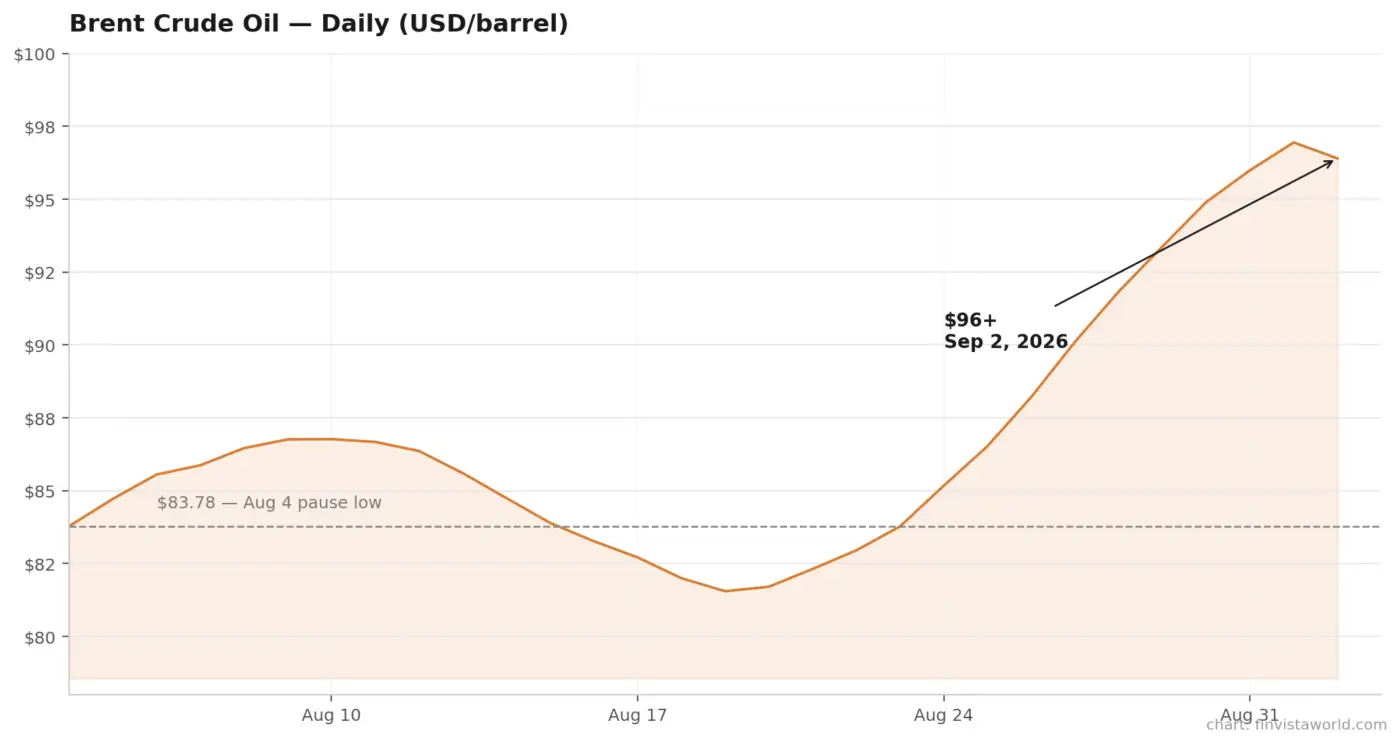 Iran War Reignites: Oil Tops $96, Stocks and Gold Slide Together as Fed Rate-Hike Odds Hit 70%
 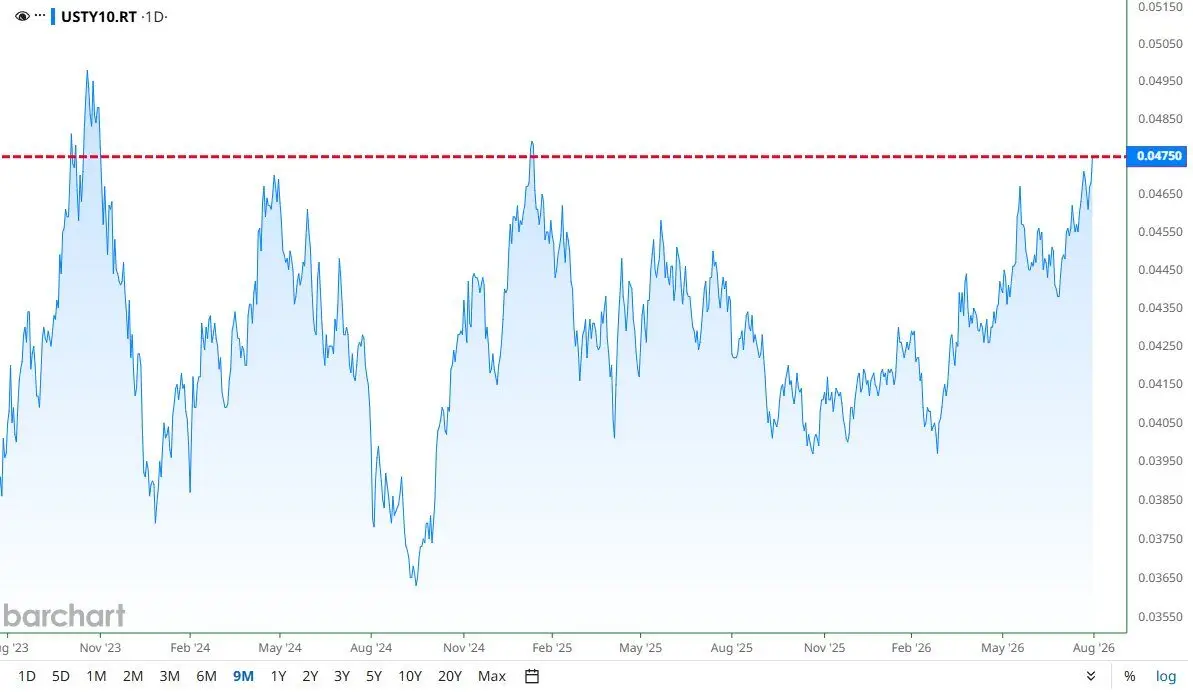 10-Year Yield Hits 4.75%, an 18-Month High – Why the Bond Market Is About to Revolt
  Bond Market Puts Warsh’s 2% Promise to the Test as 30-Year Yield Hits 19-Year High
 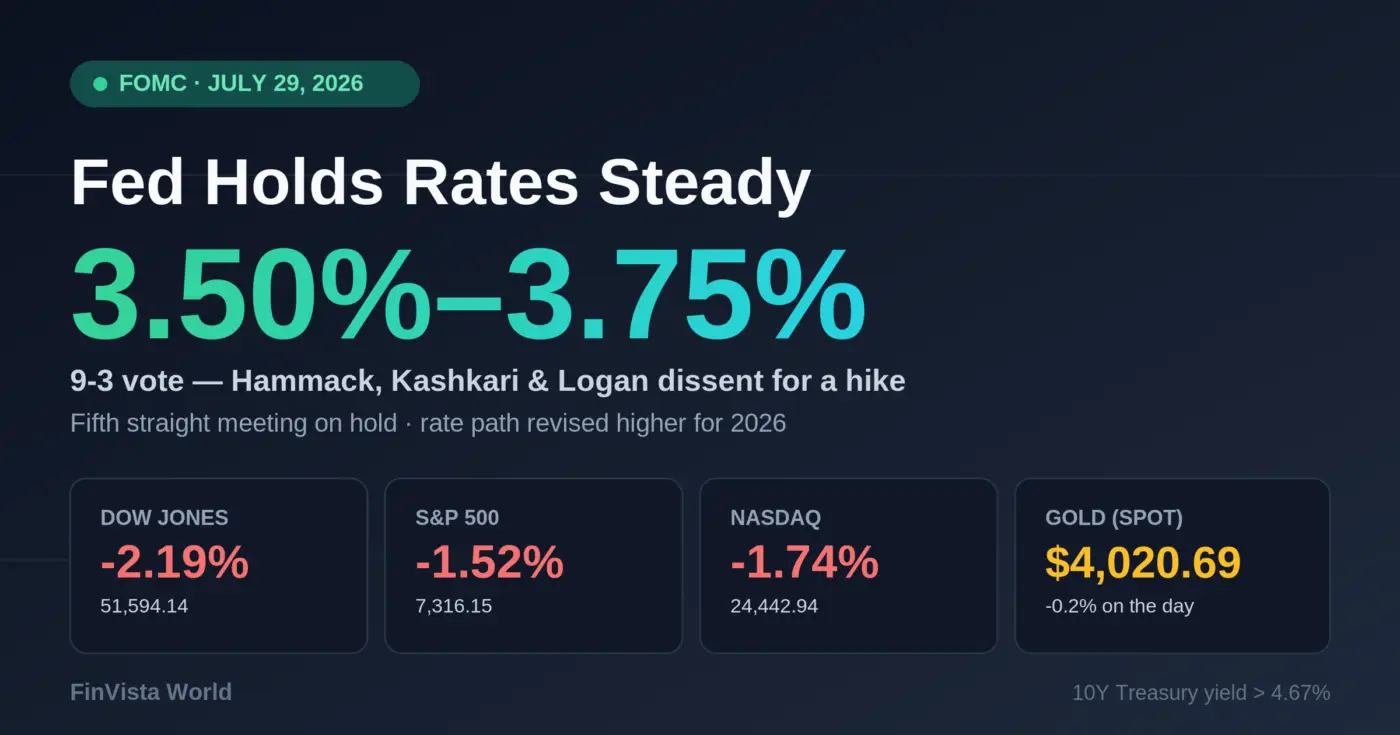 Fed Holds Rates Steady at July 2026 Meeting as Three Officials Dissent, Stocks Tumble