Decentralized finance (DeFi) has crossed a historic threshold in 2026: total value locked (TVL) across all DeFi protocols has surpassed $280 billion, representing a more than tripling compared to the same period in 2025. What was once dismissed as a niche corner of the crypto ecosystem has matured into a sophisticated, trillion-dollar addressable market that is attracting serious attention from some of the world’s largest financial institutions. This comprehensive DeFi market overview examines the protocols leading the charge, the transformative trend of real-world asset (RWA) tokenization, the risks that still demand caution, and what the next phase of DeFi growth might look like.
DeFi by the Numbers: A Market Coming of Age

The $280 billion TVL figure, while impressive, understates the full scope of DeFi’s economic activity. When you account for derivatives notional value, off-chain collateral backing on-chain loans, and cross-chain bridges, the total economic footprint of DeFi is estimated at over $600 billion. Daily trading volume across decentralized exchanges (DEXs) regularly exceeds $15 billion — comparable to mid-tier traditional exchanges. On-chain lending markets process over $8 billion in daily loan originations.
Perhaps most tellingly, DeFi protocols collectively generated approximately $4.2 billion in protocol revenue in Q1/2026 — revenue that flows to token holders, liquidity providers, and protocol treasuries without a single traditional intermediary taking a cut.
The DeFi Giants: Who’s Leading in 2026

Uniswap (UNI) — The Unstoppable DEX
Uniswap remains the dominant decentralized exchange by market share, processing over $45 billion in trading volume in May 2026 alone. The protocol’s latest iteration, v4, introduced “hooks” — customizable logic that can be attached to liquidity pools, enabling features like dynamic fees, limit orders, and TWAP oracles within a single pool contract. This architectural innovation has attracted a wave of developers building specialized trading applications on top of Uniswap v4’s liquidity.
Uniswap v4 has also meaningfully reduced gas costs for traders through singleton contracts and flash accounting, making it even more competitive with centralized exchange alternatives.
Aave (AAVE) — The Lending Market Leader
Aave is the undisputed leader in decentralized lending and borrowing, with TVL exceeding $22 billion across multiple blockchain deployments (Ethereum, Polygon, Arbitrum, Base, and others). The protocol’s GHO stablecoin — a decentralized, CDP-backed stablecoin minted by Aave users against their deposited collateral — has reached a market cap of $1.8 billion and is becoming an increasingly important source of protocol revenue.
Aave v3’s “efficiency mode” (eMode) allows users to maximize borrowing capacity when holding correlated assets, enabling sophisticated strategies like leveraged ETH staking that generate yields well above traditional finance alternatives.
Lido Finance (LDO) — Liquid Staking Dominance
Lido Finance controls approximately 28% of all staked Ethereum — around 10.5 million ETH worth over $40 billion — making it by far the largest liquid staking protocol. Lido’s stETH token has become a cornerstone of DeFi: it is accepted as collateral on Aave, MakerDAO, and dozens of other protocols, allowing users to simultaneously earn staking rewards and put their capital to work in DeFi.
Post-Pectra, Lido is upgrading its validator infrastructure to take advantage of the new 2,048 ETH validator limit, which will reduce operational costs and improve the overall yield for stETH holders.
MakerDAO / Sky Protocol — The Stablecoin Powerhouse
MakerDAO, which rebranded as Sky Protocol in late 2024, remains one of DeFi’s most important infrastructure layers through its DAI/USDS stablecoin. With a market cap of approximately $8 billion, USDS is the largest decentralized stablecoin by market cap. Sky Protocol’s “Spark” lending market has grown rapidly, offering competitive yields on stablecoin deposits backed by diversified RWA collateral.
The RWA Revolution: Bridging TradFi and DeFi

The most consequential development in DeFi during 2026 is the explosive growth of real-world asset (RWA) tokenization — the process of representing traditional financial assets (bonds, loans, real estate, equities) as blockchain tokens that can be traded and used as collateral in DeFi protocols.
Tokenized Government Bonds
US Treasury bills and bonds are now the largest category of tokenized RWAs, with a combined market cap exceeding $3.2 billion. Leading products include:
- BlackRock BUIDL: Tokenized US Treasury money market fund on Ethereum — largest tokenized fund with $1.8 billion AUM
- Franklin OnChain US Government Money Fund (FOBXX): Runs on the Stellar and Polygon networks, $780 million AUM
- Ondo Finance OUSG: Short-duration US Treasury ETF tokenized on Ethereum, widely used in DeFi as yield-bearing collateral
Private Credit On-Chain
Perhaps the most impactful RWA category is on-chain private credit — direct lending to real businesses facilitated by smart contracts. This market has grown to approximately $9 billion and is generating returns of 8–14% for DeFi lenders, significantly above what traditional money market funds offer.
Real Estate Tokenization
Tokenized real estate, while earlier-stage, has reached $1.8 billion and is growing rapidly. Protocols like RealT, Lofty.ai, and institutional platforms from Jones Lang LaSalle (JLL) are enabling fractional ownership of income-generating properties through blockchain tokens.
DeFi Risks: What Investors Must Understand
Despite DeFi’s maturation, significant risks persist that every participant must understand:
- Smart contract risk: Even audited protocols can contain vulnerabilities. The DeFi ecosystem has suffered over $5 billion in exploits and hacks since 2020. Bug bounty programs and formal verification methods have improved security but not eliminated risk.
- Oracle risk: DeFi protocols rely on price oracles (primarily Chainlink) to determine asset values for liquidations. Manipulation of oracle prices has been the attack vector in several high-profile exploits.
- Regulatory risk: Regulatory clarity is improving (especially in the EU under MiCA), but DeFi protocols operating in gray areas face potential crackdowns in certain jurisdictions.
- Liquidity risk: In extreme market conditions, liquidity can dry up rapidly, making it impossible to exit positions at expected prices. The 2022 bear market demonstrated how quickly DeFi TVL can collapse.
- Governance risk: Decisions about protocol upgrades are made by token holders through on-chain governance. Governance attacks or poor decisions by large token holders (“whales”) can harm smaller users.
The Road Ahead: What’s Next for DeFi
Looking forward, several trends are set to shape DeFi’s evolution in H2 2026 and beyond. Account abstraction (EIP-7702, now live post-Pectra) will make DeFi dramatically more user-friendly by eliminating seed phrases and gas complexity for end users. Intent-based trading — where users express desired outcomes rather than specifying execution paths — is being developed by protocols like UniswapX and CoW Protocol, promising better prices and MEV protection. And the integration of AI agents with DeFi protocols is beginning to enable autonomous portfolio management and yield optimization strategies.
Frequently Asked Questions About DeFi in 2026
Is DeFi safe in 2026?
DeFi has become significantly safer due to improved auditing standards, bug bounty programs, formal verification, and insurance protocols. However, it is not risk-free. Smart contract exploits still occur, and participants should only use reputable, audited protocols and never allocate more than they can afford to lose.
How do I start using DeFi?
Begin by setting up a non-custodial wallet (MetaMask, Phantom, or Coinbase Wallet), acquiring some ETH or other chain-native tokens for gas fees, and starting with low-risk activities like supplying stablecoins to established lending protocols (Aave) or providing liquidity to stable pairs on DEXs.
What is the highest-yielding DeFi strategy?
Yields vary significantly by risk level. Conservative strategies (supplying blue-chip stablecoins to Aave) currently yield 5–8% APY. Medium-risk strategies (liquidity provision on DEXs) yield 10–25% APY. High-risk strategies (leveraged yield farming, new protocol liquidity mining) can yield 50%+ APY but carry substantially higher smart contract and market risk.
⚠️ Risk Disclaimer: DeFi investments carry unique and significant risks including smart contract vulnerabilities, regulatory uncertainty, and market volatility. This content is for educational purposes only and does not constitute financial or investment advice.
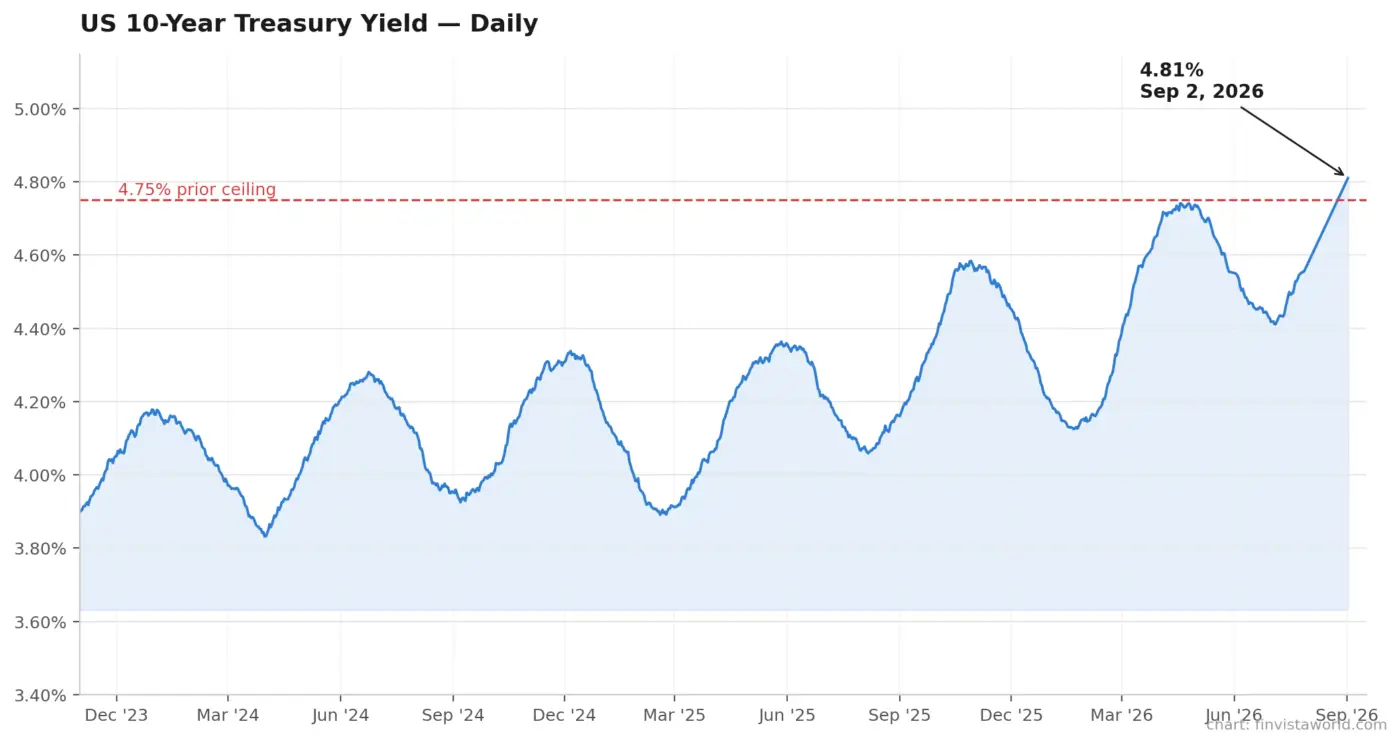 ADP Jobs Miss Collides With Rising Yields: Wall Street Stalls as 10-Year Hits 4.81%
 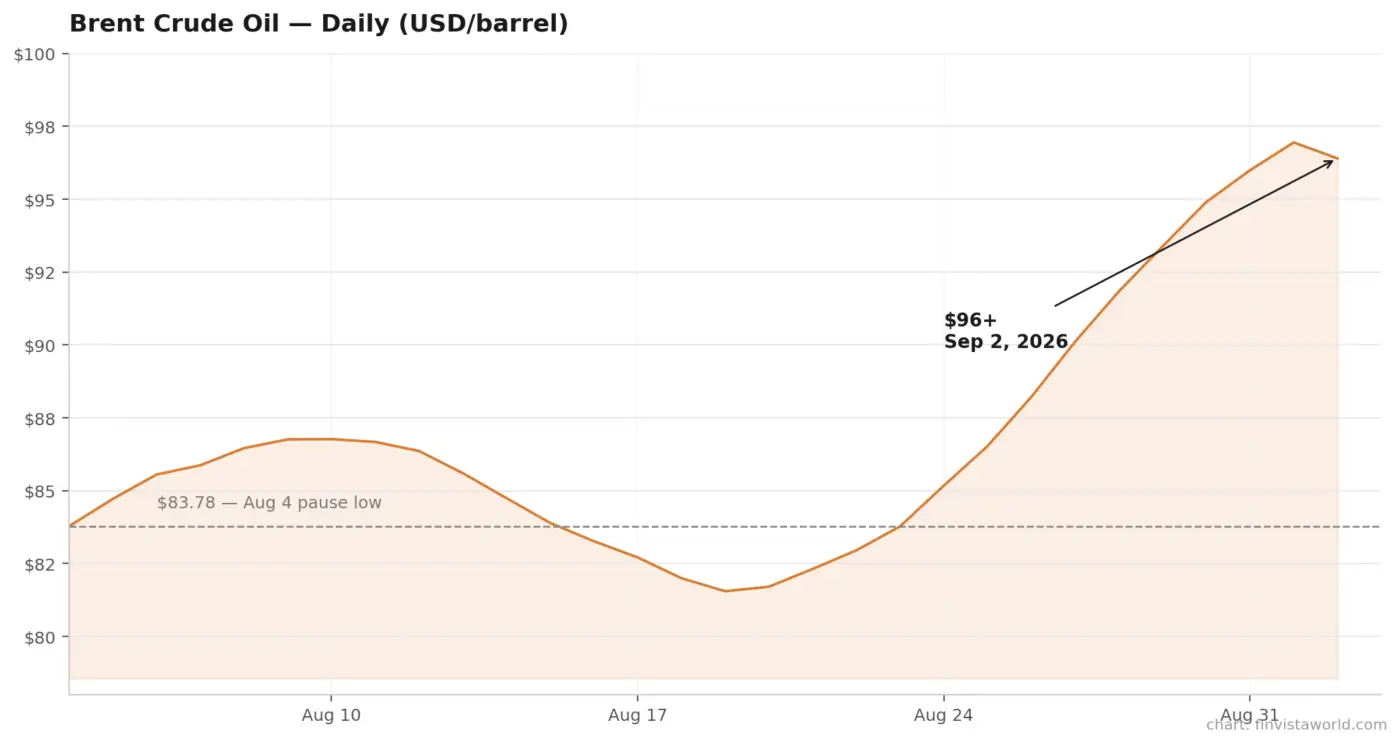 Iran War Reignites: Oil Tops $96, Stocks and Gold Slide Together as Fed Rate-Hike Odds Hit 70%
  Oil Sinks 6%, Dow Hits Record High as Iran Pause Reprices Markets – Crypto Sits It Out
 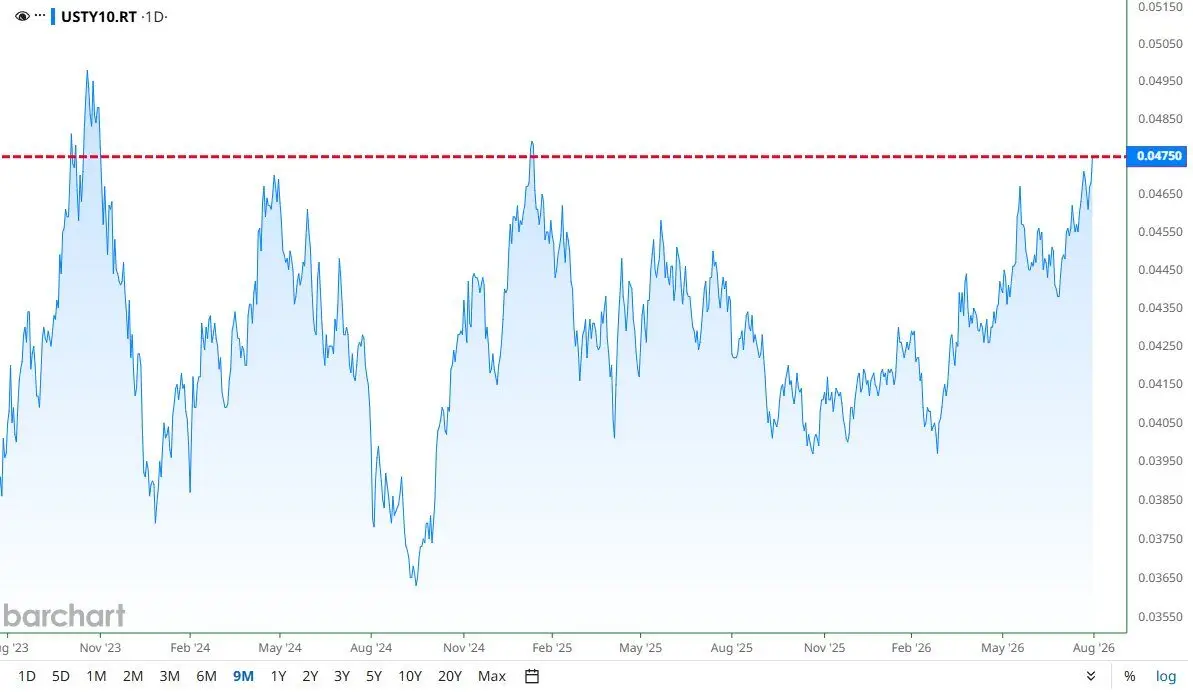 10-Year Yield Hits 4.75%, an 18-Month High – Why the Bond Market Is About to Revolt
  Bond Market Puts Warsh’s 2% Promise to the Test as 30-Year Yield Hits 19-Year High
 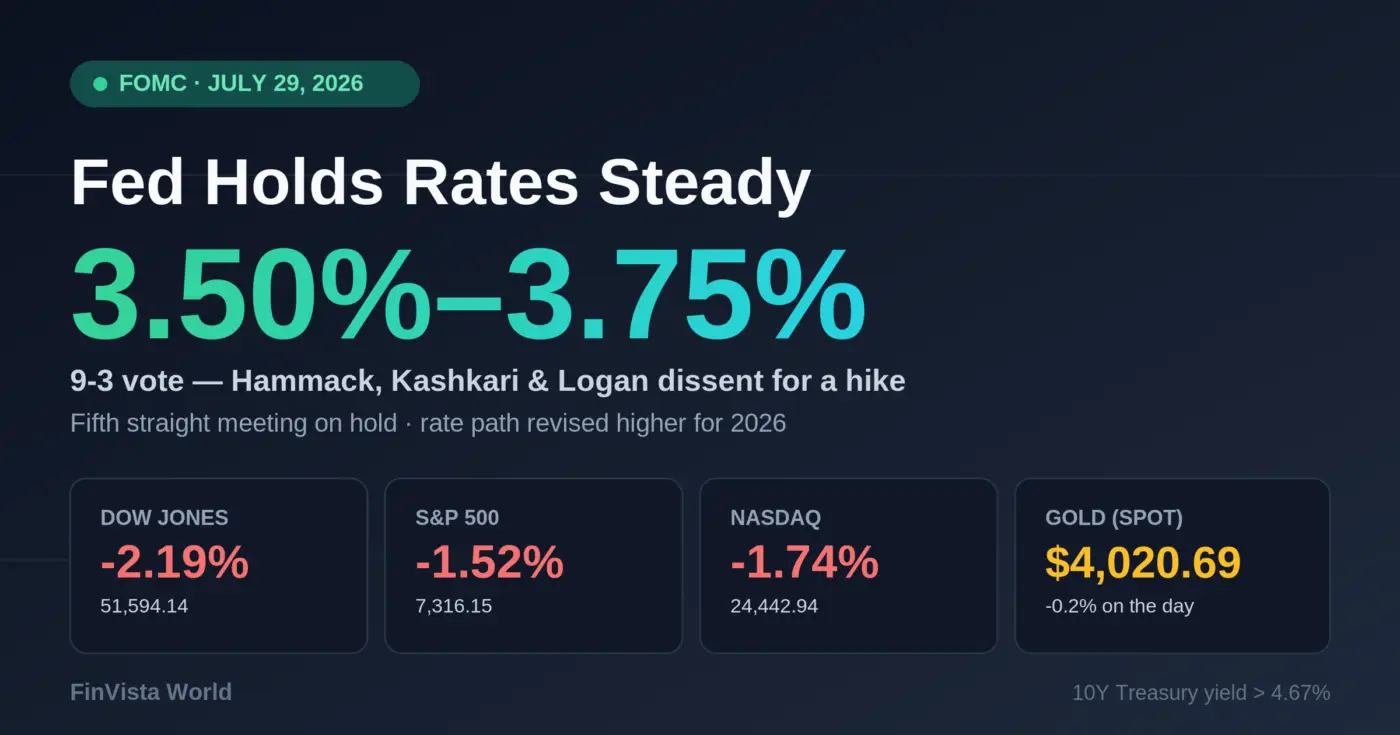 Fed Holds Rates Steady at July 2026 Meeting as Three Officials Dissent, Stocks Tumble