
Here is an uncomfortable truth that most binary options educators will not tell you: the majority of traders who lose money do not lose because they have a bad strategy. They lose because of psychology. Study after study of retail trader behavior — and the experience of professional traders across all markets — confirms that the biggest enemy of trading performance is not the market, not the broker, and not bad luck. It is the trader’s own mind. In this in-depth guide, we identify the seven most destructive psychological patterns in binary options trading, explain the cognitive science behind why they happen, and provide actionable, evidence-based techniques to overcome each one.
Why Trading Psychology Is Critical in Binary Options Specifically

Binary options amplify psychological challenges in ways that other trading instruments do not. The fixed-outcome nature of each trade (win everything or lose everything) creates an especially powerful emotional stimulus. The short time frames (60 seconds to a few hours) mean that the feedback loop between decision and outcome is extremely compressed, which accelerates both positive reinforcement of bad habits and negative emotional responses to losses. And the visual simplicity of the “Call” and “Put” interface makes it dangerously easy to trade impulsively, without the friction that other instruments impose.
Understanding this psychological context is the first step to managing it. The second step is learning to recognize your specific psychological vulnerabilities and building systems that protect your trading decisions from them.
Mistake 1: Revenge Trading (The Tilt)
What it is: Revenge trading occurs when a trader, after experiencing a loss (or series of losses), immediately re-enters the market with a larger position, driven by the emotional need to “get back” what was lost. The term “tilt” is borrowed from poker, where it describes the same phenomenon.
Why it happens: Losses activate the brain’s threat-response system. The amygdala — the brain’s emotional processing center — overrides the prefrontal cortex (responsible for rational decision-making). In this state, the impulse to restore lost status overwhelms logical risk assessment.
The damage: Revenge trading almost always results in larger losses. The trader is now trading with compromised judgment, elevated stress, and — critically — a larger position size that puts more capital at risk precisely when decision quality is lowest.
The fix: Implement a mandatory “circuit breaker” rule: after any three consecutive losses, close the platform and do not trade again until the following day. Write this rule down, print it, and put it where you can see it. Also commit to flat position sizing — never increasing trade size after a loss. Consider using a trading timer app that locks you out of the platform after a loss streak.
Mistake 2: Overtrading (Quantity Over Quality)
What it is: Overtrading means placing far too many trades — typically driven by boredom, impatience, excitement, or the mistaken belief that more activity equals more profit. A classic overtrader checks the platform constantly and manufactures reasons to enter trades even when no genuine setup exists.
Why it happens: The human brain is wired to seek stimulation and to feel productive through action. Sitting on your hands waiting for a perfect setup feels uncomfortable. Placing a trade — any trade — relieves that discomfort temporarily, even if the trade is low-probability.
The damage: Every low-probability trade you take reduces your overall win rate and erodes your statistical edge. Over hundreds of trades, the difference between trading 5 high-quality setups per day versus 20 mediocre ones is the difference between profitability and account destruction.
The fix: Set a maximum daily trade limit (3–5 for most strategies) and enforce it with the same discipline as a stop loss. Before each trade, write down your specific entry criteria in your trading journal. If you cannot articulate a clear reason for entering, you do not trade.
Mistake 3: FOMO — Fear of Missing Out
What it is: FOMO occurs when a trader chases a move that has already started — jumping into a Call option because price has already been rising for 10 minutes, or entering a Put because news has already sent price sharply lower — rather than waiting for a proper pullback and setup.
Why it happens: Watching price move rapidly in one direction triggers a powerful social instinct: others are “making money” from this move and you are being left behind. This social comparison anxiety bypasses rational risk assessment.
The damage: Entries made out of FOMO are typically late — you are buying near the top of a move or selling near the bottom, often just before a reversal. Binary options are particularly punishing for FOMO trading because the binary payout means a “almost right” entry is just as costly as a completely wrong one.
The fix: Adopt the mindset that “there will always be another trade.” Markets produce new setups every session. Remind yourself that passing on a trade costs you nothing; entering a bad trade costs you your stake. Build a watchlist of levels and setups before the market opens and commit to only taking trades that match your pre-defined criteria — not trades that “look good” in the moment.
Mistake 4: Confirmation Bias
What it is: Confirmation bias is the tendency to seek, interpret, and recall information in a way that confirms your pre-existing beliefs. In trading, it manifests as selectively reading the chart to find reasons why your anticipated trade is correct, while unconsciously ignoring signals that contradict it.
Why it happens: The human brain is fundamentally a pattern-recognition and prediction machine. Once it commits to a hypothesis, it naturally allocates more weight to evidence that confirms it — a cognitive shortcut that is useful in many life contexts but dangerous in trading.
The damage: Confirmation bias leads traders to enter trades with inflated confidence, hold losing positions longer than they should (looking for the “recovery” that supports their original thesis), and miss important reversal signals.
The fix: Before entering any trade, deliberately make the strongest possible case against it. Ask yourself: “What would have to be true for this trade to lose? What signals would confirm that the opposite view is correct?” This forces genuine engagement with contradicting evidence.
Mistake 5: Loss Aversion and the Endowment Effect
What it is: Nobel Prize-winning behavioral economist Daniel Kahneman established that humans feel the pain of a loss approximately twice as strongly as the pleasure of an equivalent gain. This asymmetry — loss aversion — causes traders to make irrational decisions to avoid realizing losses.
Why it happens: Losses feel like personal failures and trigger shame responses. Our brains evolved to avoid loss aggressively (losing food or shelter had survival consequences), which creates a powerful emotional bias against accepting realized losses.
The fix: Reframe how you think about individual trade outcomes. Each trade is simply one data point in a long series. A single losing trade tells you nothing meaningful about your strategy’s validity — only your overall win rate over 100+ trades matters. Track your expectancy (average profit per trade accounting for win rate and payout) rather than focusing on individual wins and losses.
Mistake 6: Gambler’s Fallacy
What it is: The gambler’s fallacy is the belief that past random events influence the probability of future independent events. In binary options, it manifests as thoughts like: “I’ve had five losing trades in a row — the next one must win” or “EUR/USD has gone down for three consecutive 15-minute candles, so it must go up now.”
Why it happens: The human brain is extraordinarily bad at intuitively understanding probability and randomness. We see patterns and streaks in truly random sequences and assign meaning where none exists.
The fix: Internalize the mathematical reality: if your strategy has a 60% win rate, each individual trade has a 60% win rate regardless of what happened in the previous trade. Streaks of losses happen — they are statistically expected, not signs of impending reversal. Never change your trade direction based on streak thinking alone.
Mistake 7: Absence of a Trading Journal
What it is: Most retail traders keep no systematic record of their trades, their decision-making process, or their emotional state at the time of entry. This means they cannot learn from their mistakes — they repeat the same errors in different market conditions.
Why it happens: Journaling takes time and effort. After a losing day, the last thing you want to do is sit down and document what went wrong. The discomfort of reviewing bad trades makes avoidance the path of least resistance.
The fix: Build journaling into your trading routine as a non-negotiable discipline. For each trade, record: asset, direction, expiry, entry rationale (specific pattern and level), emotional state (1–10 scale of confidence/anxiety), outcome, and post-trade analysis (what did I do right? what could I improve?). Review your journal weekly. After 100 trades, you will have invaluable data on your strongest and weakest trading contexts — information no external source can provide.
Building a Psychological Edge: The Daily Pre-Trade Ritual
Professional traders in all markets use pre-trade rituals to optimize their mental state before the session begins. Consider implementing the following 10-minute routine before each trading session:
- Review your trading rules (print them and read them aloud)
- Check your account balance and calculate today’s maximum risk (2% of balance)
- Mark key levels on your charts before the session opens
- Set your maximum trade count for the session
- Rate your emotional state honestly (if score is below 6/10, do not trade today)
Frequently Asked Questions
How long does it take to develop trading discipline?
Research in behavioral psychology suggests it takes approximately 60–90 days of consistent practice to build new habits. Trading discipline is no different. Expect a minimum of 3 months of dedicated demo trading with journaling before your psychological patterns begin to stabilize.
Should I trade binary options if I’m under financial stress?
No. Trading under financial pressure is one of the most reliable predictors of poor outcomes. When you need the money you are risking, loss aversion and emotional decision-making become overwhelming. Only trade with genuinely discretionary capital — money whose loss would not affect your quality of life.
Can trading psychology be learned, or is it innate?
Trading psychology can absolutely be improved through study, self-awareness, and practice. While some personality traits (emotional stability, patience, analytical thinking) naturally support good trading psychology, the specific behavioral patterns that destroy trading accounts are conditioned responses that can be identified and changed.
⚠️ Risk Disclaimer: Binary options are high-risk financial instruments. If you are experiencing financial distress or compulsive trading behavior, please seek appropriate professional support. This content is educational and does not constitute financial advice.
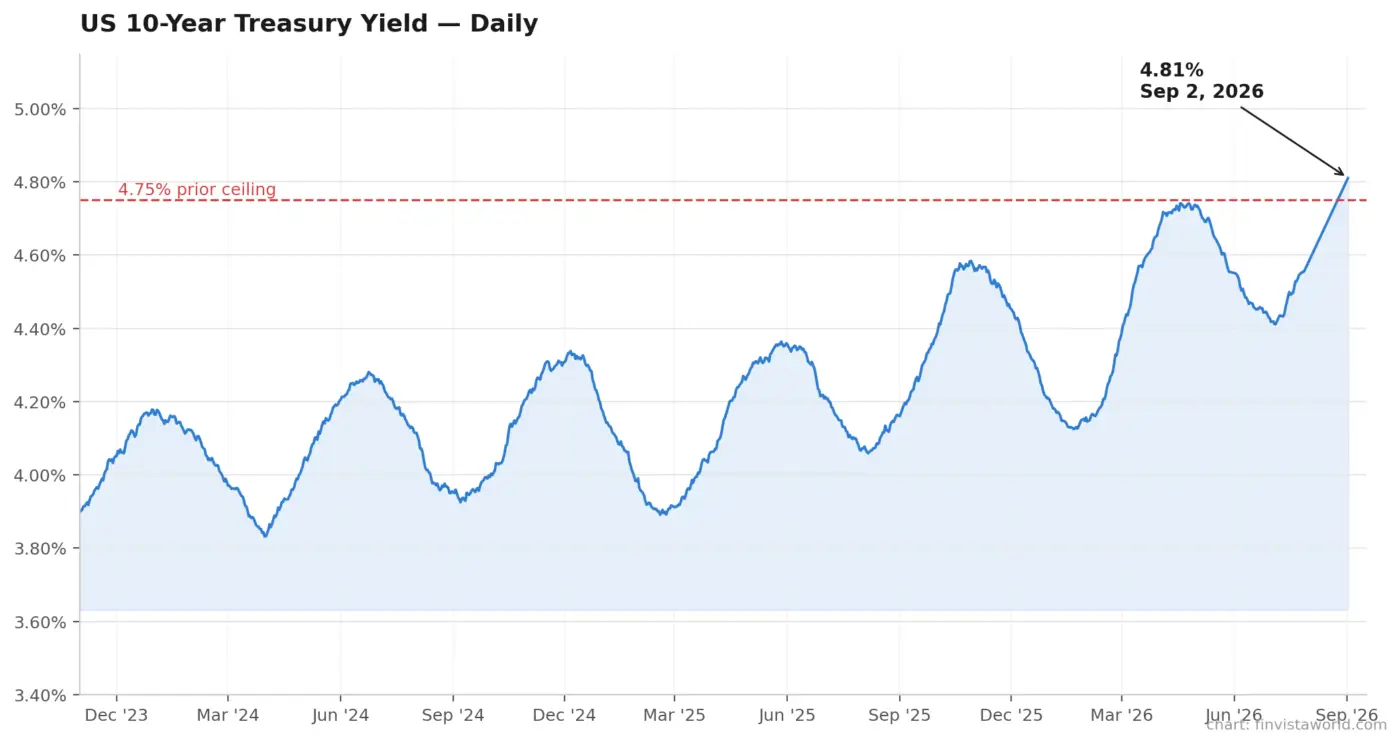 ADP Jobs Miss Collides With Rising Yields: Wall Street Stalls as 10-Year Hits 4.81%
 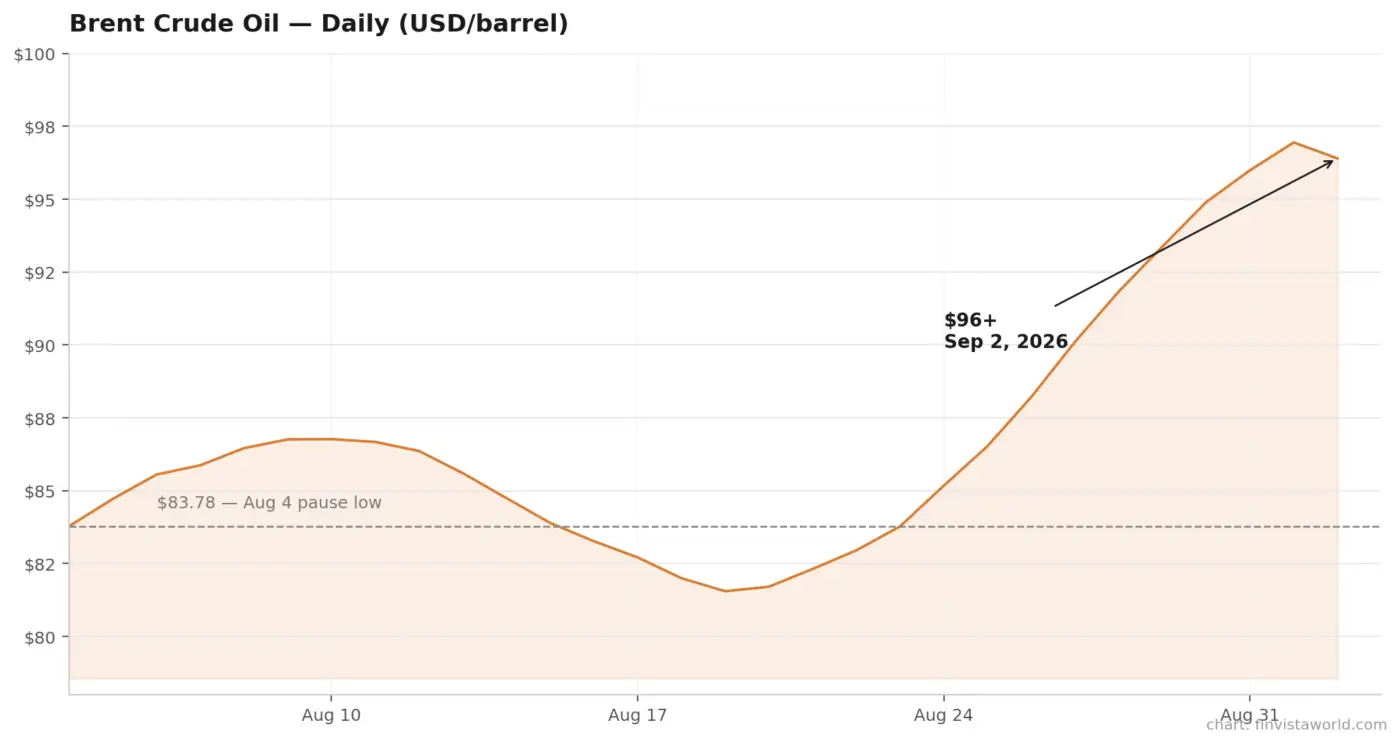 Iran War Reignites: Oil Tops $96, Stocks and Gold Slide Together as Fed Rate-Hike Odds Hit 70%
  Oil Sinks 6%, Dow Hits Record High as Iran Pause Reprices Markets – Crypto Sits It Out
 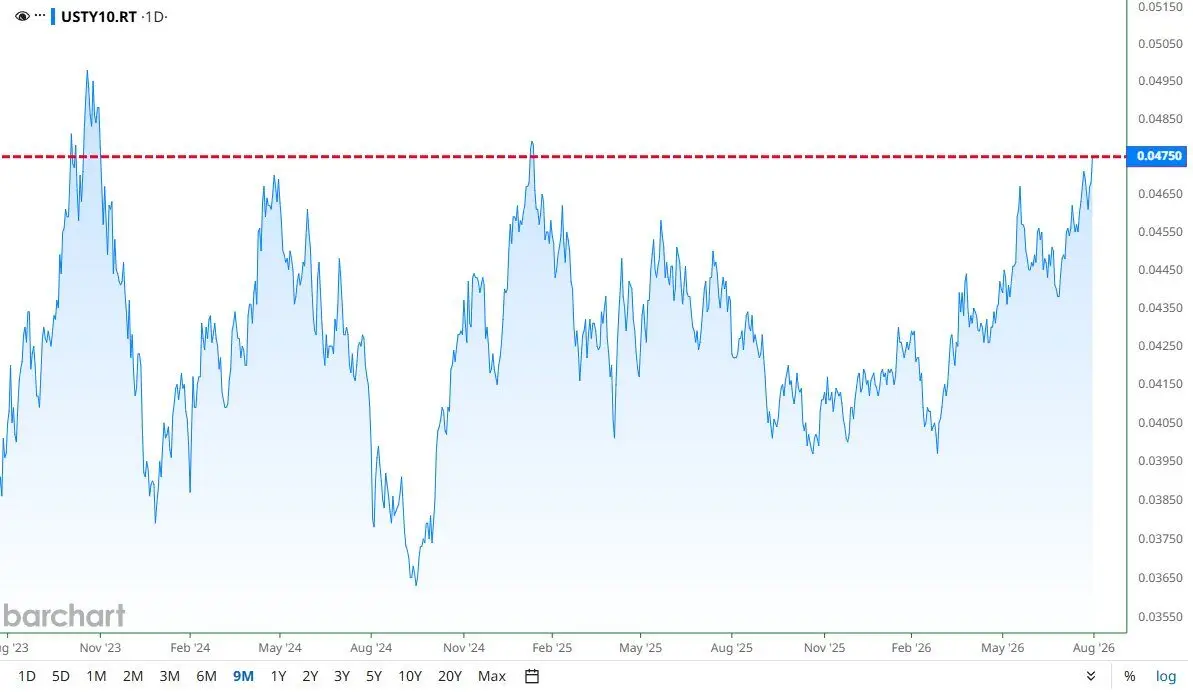 10-Year Yield Hits 4.75%, an 18-Month High – Why the Bond Market Is About to Revolt
  Bond Market Puts Warsh’s 2% Promise to the Test as 30-Year Yield Hits 19-Year High
 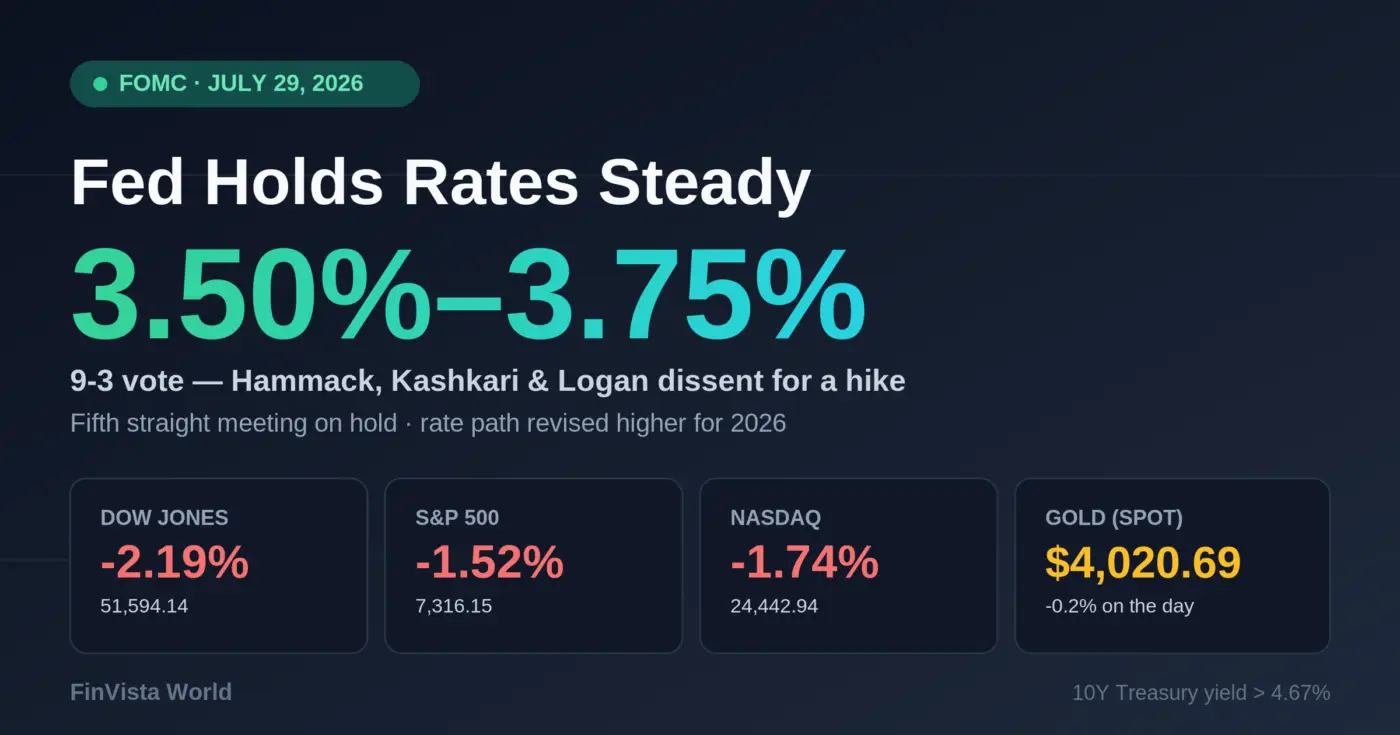 Fed Holds Rates Steady at July 2026 Meeting as Three Officials Dissent, Stocks Tumble