
The story of Ethereum in 2026 is, in many ways, the story of a market that has found its institutional footing. Following the approval of US spot Ethereum ETFs in mid-2024, the initial market reception was underwhelming compared to the Bitcoin ETF frenzy. But in 2026, something has shifted. Institutional inflows into ETH ETFs are accelerating, on-chain fundamentals are improving sharply, and Ethereum’s technology has never been more capable thanks to the landmark Pectra upgrade. This comprehensive guide examines the current state of the Ethereum market, the ETF demand picture, technical price levels, and where ETH may be headed in the months ahead.
The Ethereum ETF Landscape: Slow Start, Accelerating Now

When US spot Ethereum ETFs launched in July 2024, they attracted only modest inflows relative to their Bitcoin counterparts. Much of this was due to one key difference: unlike Bitcoin ETFs, the initial Ethereum ETF products did not allow staking — meaning investors who held ETH through these vehicles were foregoing the 3–4% annualized staking yield available to direct ETH holders. This created a structural disadvantage relative to direct ownership.
However, 2026 has brought significant improvement. Total AUM across all US spot ETH ETFs now exceeds $18 billion, and the pace of weekly inflows has more than doubled since March 2026. The catalyst? Two key developments: the successful Pectra upgrade (which dramatically improved the staking experience) and growing evidence that institutional allocators are treating ETH as a distinct and complementary asset to Bitcoin in diversified crypto portfolios.
Largest Ethereum ETF Products (June 2026)
| Fund | Issuer | AUM (USD) | Ticker |
|---|---|---|---|
| iShares Ethereum Trust | BlackRock | $6.2 billion | ETHA |
| Fidelity Ethereum Fund | Fidelity | $4.1 billion | FETH |
| Bitwise Ethereum ETF | Bitwise | $2.8 billion | ETHW |
| Grayscale Ethereum Mini Trust | Grayscale | $2.3 billion | ETH |
| Others (combined) | Various | ~$2.6 billion | — |
Ethereum Pectra Upgrade: A Game-Changer for the Network

The Pectra upgrade, deployed successfully in May 2026, represents Ethereum’s most significant technical advancement since the Merge in 2022. The upgrade introduced several transformative improvements:
- Increased validator staking limit: Maximum stake per validator raised from 32 ETH to 2,048 ETH, dramatically reducing operational overhead for large institutional stakers and making it easier for major financial institutions to participate directly in Ethereum’s proof-of-stake consensus
- EIP-7702 (Smart Account functionality): Enables externally owned accounts (EOAs) to temporarily behave like smart contracts, vastly improving the user experience for dApps and wallet interactions
- Enhanced blob throughput: Improvements to data availability for Layer 2 rollups, further reducing transaction fees across the Ethereum ecosystem
- Improved validator exit queues: Faster exits reduce the “lock-up risk” concern that had deterred some institutional stakers
The market’s reaction to Pectra has been strongly positive. ETH’s price rose approximately 12% in the week following the upgrade’s deployment, and staking inflows have increased substantially as the improved validator experience reduces operational friction.
Ethereum’s Layer 2 Ecosystem: Fueling On-Chain Activity
One of the most important but underappreciated drivers of Ethereum’s value in 2026 is the explosive growth of its Layer 2 ecosystem. Networks like Arbitrum, Optimism, Base (Coinbase’s L2), and zkSync are processing millions of transactions per day at a fraction of mainnet costs — while settling their security back to Ethereum.
Key Layer 2 metrics as of June 2026:
- Total L2 TVL: $52 billion (up from $18 billion in early 2025)
- Daily L2 transactions: Over 22 million (vs. approximately 1 million on Ethereum mainnet)
- Base (Coinbase L2): Now the fastest-growing L2 with over 8 million monthly active addresses
This activity benefits Ethereum directly: L2 transactions generate “blob fees” paid in ETH, which are partially burned under EIP-1559. Higher L2 activity means more ETH burned, reducing net issuance and creating deflationary pressure on the token supply.
ETH Price: Technical Analysis

Monthly and Weekly Timeframes
On the monthly chart, ETH/USD is in a clear recovery trend from its 2024 lows near $2,200. The pair has broken above the critical $3,500 resistance level — a zone that had capped rallies throughout much of 2024 — and appears to be establishing it as new support. On the weekly chart, ETH printed a strong bullish engulfing candle the week of the Pectra upgrade, a technically significant development.
Daily Chart Levels
| Level | Price (USD) | Role |
|---|---|---|
| Key resistance | $4,200–$4,300 | Previous ATH zone / supply area |
| Resistance | $4,000 | Psychological level |
| Current price | ~$3,850 | Post-Pectra consolidation |
| Key support | $3,500 | Breakout retest / 50-day EMA |
| Strong support | $3,200–$3,300 | 100-day SMA / major demand zone |
ETH Price Forecast 2026
Bullish scenario: ETH breaks above $4,300 and challenges its all-time high near $4,870 (set in late 2021). With continued ETF inflows, staking yield improvements, and Layer 2 activity driving fee burns, a move to $5,500–$6,000 by Q4 2026 is achievable in this scenario.
Base case: ETH consolidates between $3,500 and $4,500 through Q3/2026 before making a decisive move higher in Q4. A return to $4,800–$5,000 by year-end is the consensus expectation among crypto research firms.
Bear case: A broader crypto market sell-off triggered by a Bitcoin correction could pull ETH back to $2,800–$3,000. This would likely represent a buying opportunity within the broader bull cycle.
Frequently Asked Questions
Is Ethereum a good investment in 2026?
Ethereum’s combination of institutional ETF demand, improving tokenomics (deflationary dynamics from EIP-1559), a growing Layer 2 ecosystem, and the successful Pectra upgrade make it one of the more fundamentally compelling crypto assets in 2026. However, it remains highly volatile and speculative.
Can Ethereum reach $10,000 in 2026?
$10,000 would represent approximately a 160% gain from current levels. While not the consensus base case for 2026, it is within the range of “bull case” scenarios modeled by some analysts if ETF inflows accelerate dramatically and Bitcoin reaches $200,000+.
What is ETH staking yield in 2026?
Following the Pectra upgrade, the annualized staking yield for ETH validators is approximately 3.2–3.8%, depending on network activity levels. This yield is paid in ETH.
⚠️ Risk Disclaimer: Cryptocurrency investments carry significant risk of loss. This content is educational in nature and does not constitute financial or investment advice. Conduct thorough due diligence before investing.
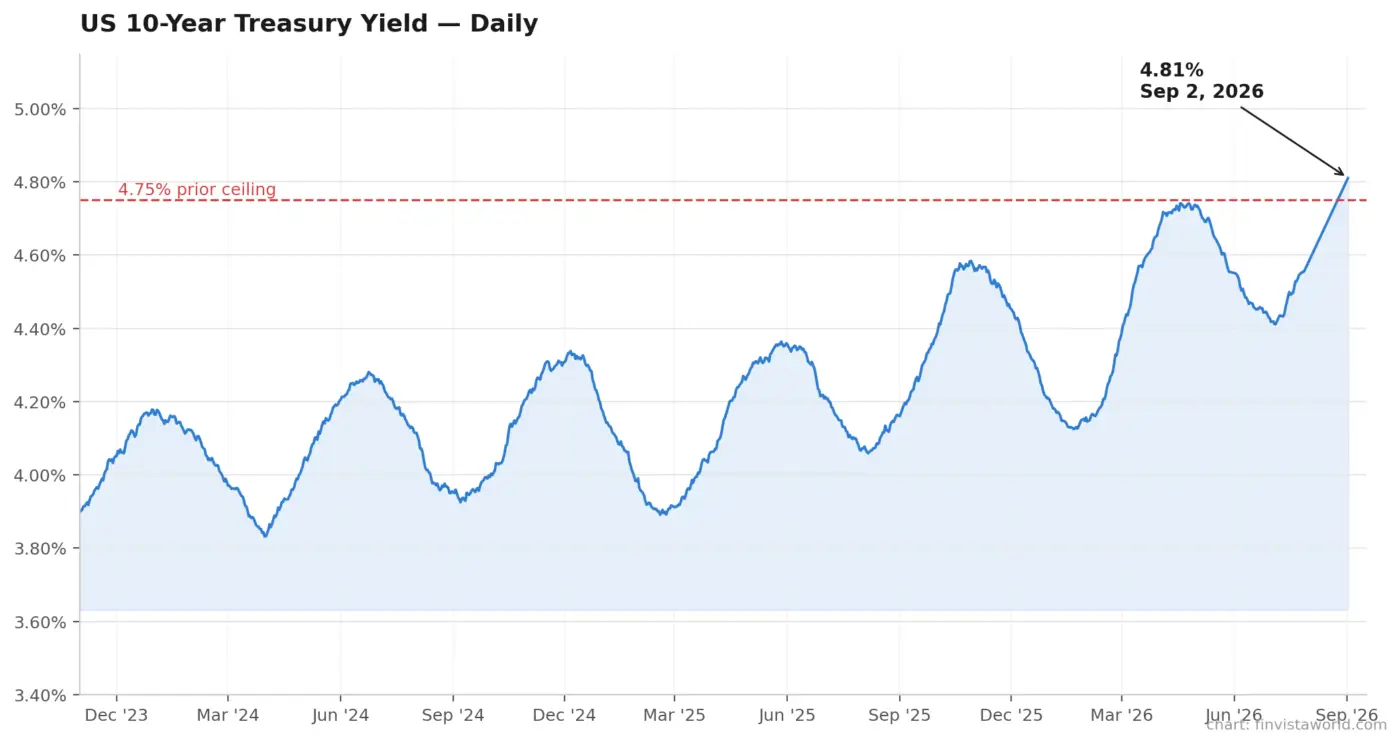 ADP Jobs Miss Collides With Rising Yields: Wall Street Stalls as 10-Year Hits 4.81%
 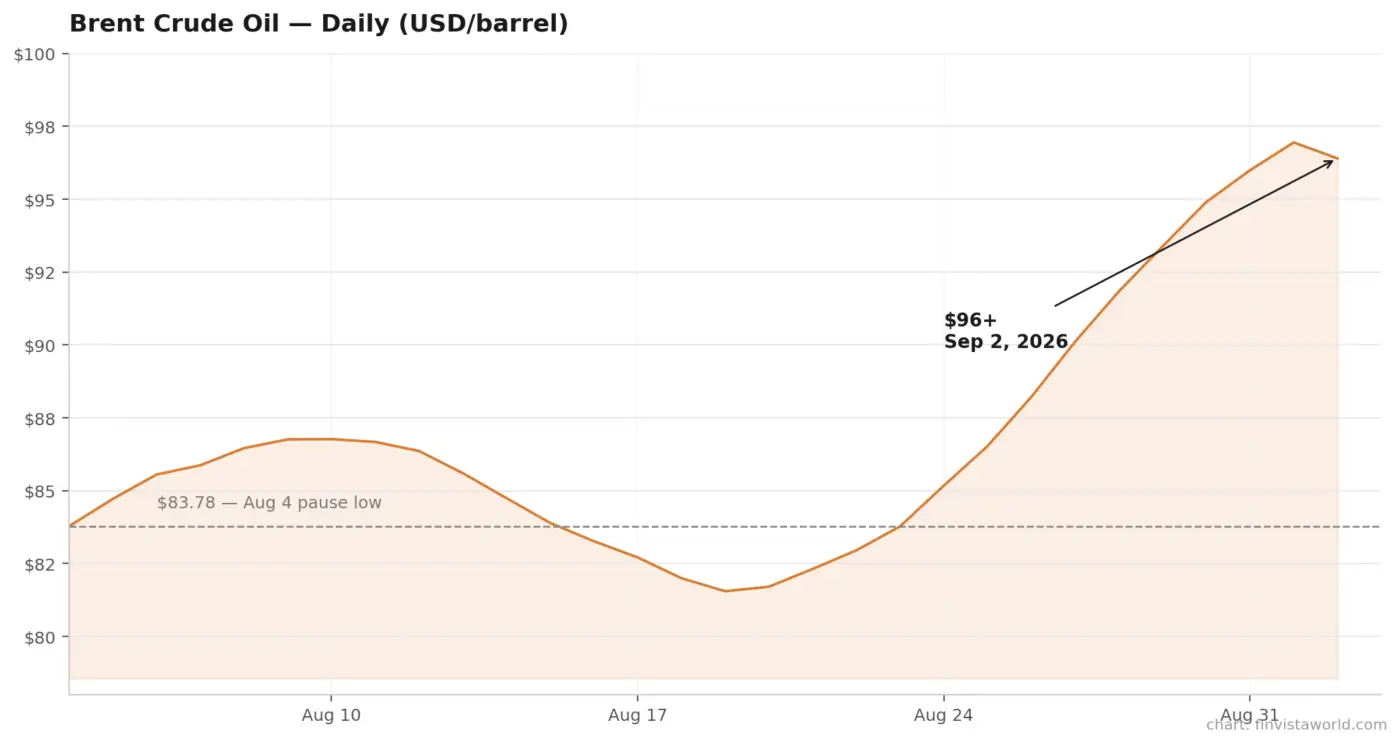 Iran War Reignites: Oil Tops $96, Stocks and Gold Slide Together as Fed Rate-Hike Odds Hit 70%
  Oil Sinks 6%, Dow Hits Record High as Iran Pause Reprices Markets – Crypto Sits It Out
 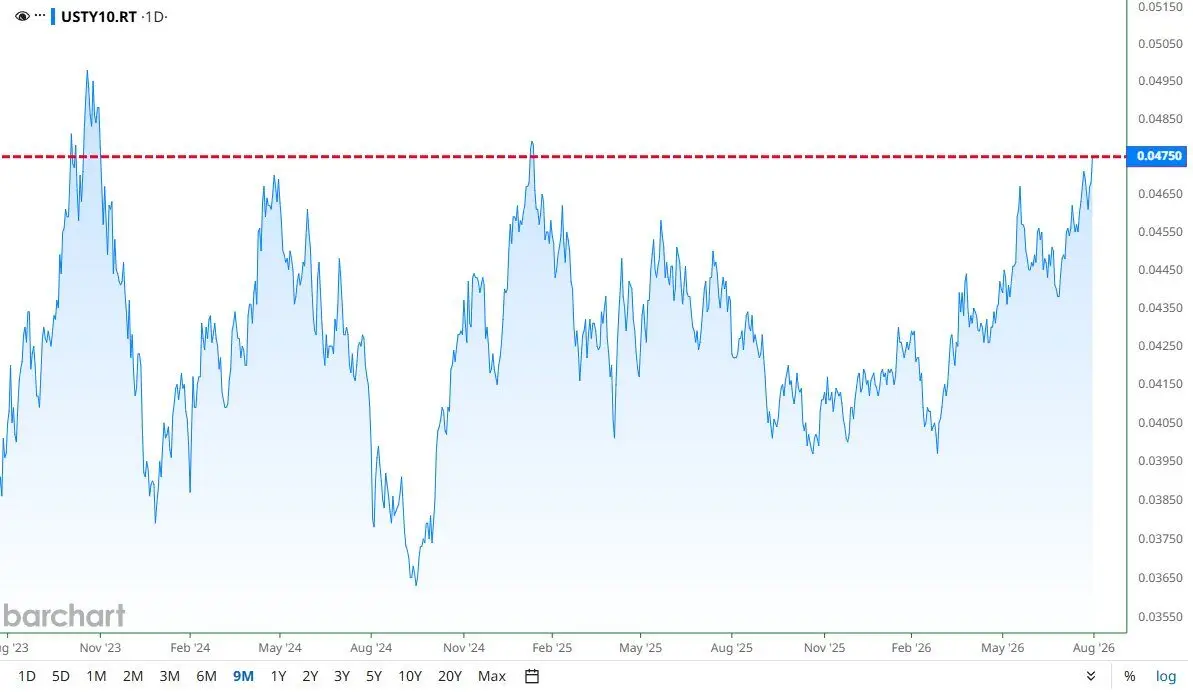 10-Year Yield Hits 4.75%, an 18-Month High – Why the Bond Market Is About to Revolt
  Bond Market Puts Warsh’s 2% Promise to the Test as 30-Year Yield Hits 19-Year High
 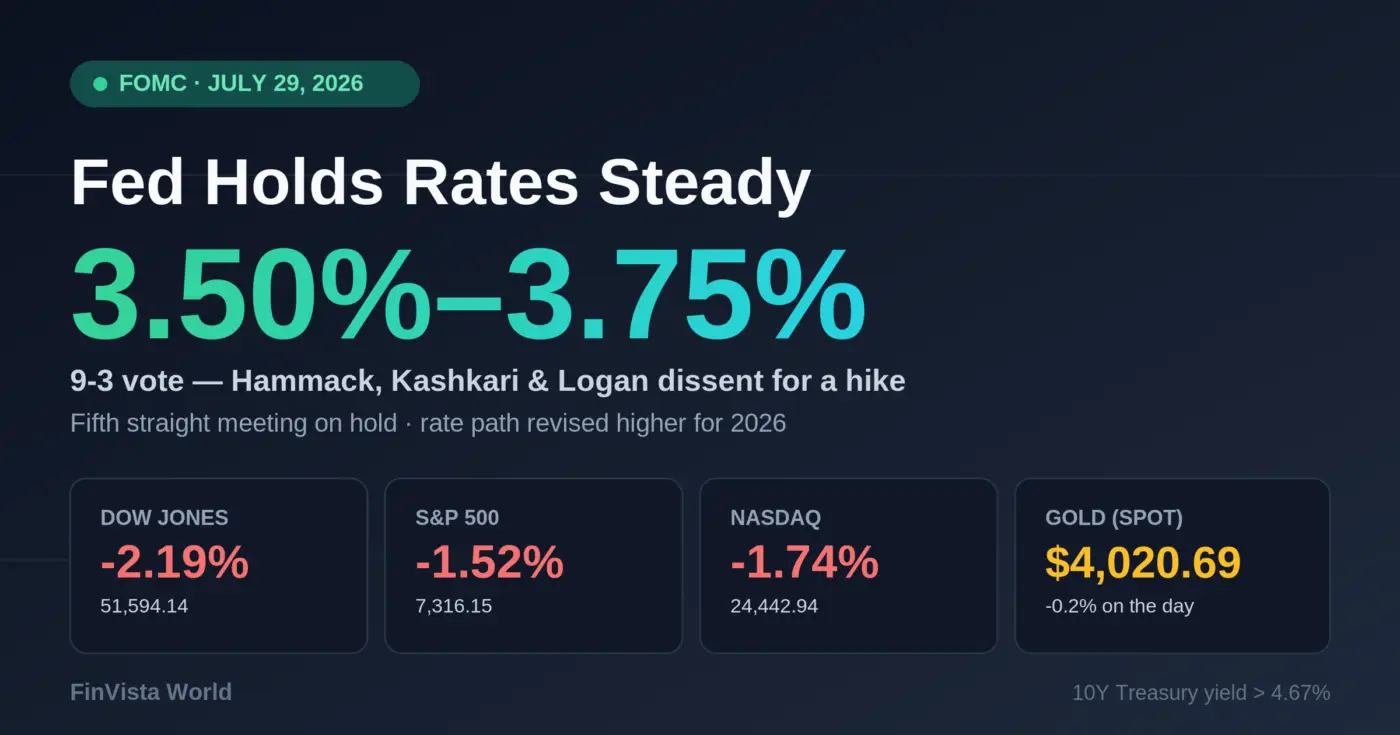 Fed Holds Rates Steady at July 2026 Meeting as Three Officials Dissent, Stocks Tumble