
The EUR/USD currency pair is once again at the center of forex market attention as the U.S. Federal Reserve’s latest interest rate decision sends shockwaves through global currency markets. With the Fed holding rates firm at 4.75%–5.00% and adopting an unexpectedly hawkish tone, the U.S. dollar has surged to multi-week highs against the euro — creating both risks and opportunities for active forex traders. In this analysis, we break down the latest EUR/USD price action, technical levels, and fundamental drivers that could shape the pair’s trajectory in the weeks ahead.
Fed Rate Decision and Its Impact on EUR/USD

At its June 2026 meeting, the Federal Open Market Committee (FOMC) voted unanimously to keep the federal funds rate unchanged at 4.75%–5.00%. While the decision matched market consensus, it was the accompanying policy statement and Fed Chair’s press conference that caught traders off guard. The FOMC signaled it needs to see “significantly more progress” on inflation before considering rate cuts — a more restrictive stance than many had anticipated.
In response, the Dollar Index (DXY) surged approximately 0.8% to its highest level in three weeks, breaking above the 105.50 resistance zone. EUR/USD fell sharply from its weekly open at 1.0820 to trade near 1.0745, representing a decline of roughly 70 pips within the first two trading sessions of the week.
The broader narrative is clear: as long as the Fed maintains its “higher for longer” posture while other major central banks move toward easing, the USD is likely to maintain its structural advantage over the euro.
Eurozone Data: ECB Rate Cut Expectations Build

From the European side, incoming economic data is reinforcing the case for further ECB easing. Eurozone CPI inflation for May came in at 2.1% year-on-year — just above the ECB’s 2% target but a significant deceleration from earlier in the year. Core inflation also eased, falling to 2.7% from 2.9% the previous month.
This data has strengthened market expectations that the ECB will deliver its second rate cut of 2026 at either the July or September meeting. ECB President Christine Lagarde has acknowledged that the inflation outlook is improving, though she stopped short of committing to a specific timeline.
Key Eurozone data releases to monitor in the coming weeks include:
- June 10: ECB President Lagarde speech at the ECB Forum
- June 14: Eurozone industrial production data
- June 18: German ZEW economic sentiment index
- June 25: Flash Eurozone PMI for June
US Non-Farm Payrolls: Another Beat Supports Dollar
Adding further fuel to the dollar’s rally was May’s Non-Farm Payrolls (NFP) report, released at the start of the week. The US economy added 218,000 jobs in May — comfortably ahead of the 190,000 consensus forecast — while the unemployment rate held steady at 3.9%. Average hourly earnings rose 0.4% month-on-month, suggesting wage pressures remain persistent.
A strong labor market gives the Fed more justification to keep rates elevated for longer, reducing the probability of near-term rate cuts. According to CME FedWatch data, the probability of a rate cut at the July FOMC meeting dropped from 22% to just 11% following the payrolls release.
EUR/USD Technical Analysis

From a technical standpoint, the EUR/USD chart is showing clear signs of bearish momentum in the near term, while the longer-term picture remains mixed.
Daily Chart Breakdown
On the daily timeframe, EUR/USD has broken below its 20-day simple moving average (SMA) at 1.0795, a bearish development that has opened the door for further downside. The pair is now testing the 50-day EMA around 1.0740, which is expected to provide near-term support.
The Relative Strength Index (RSI) has dropped to 38, approaching the oversold threshold of 30. While this suggests downside momentum is losing steam, RSI readings in a trend can remain in oversold territory for extended periods.
Key Technical Levels
| Level | Price | Significance |
|---|---|---|
| Major resistance | 1.0860 | June high / 200-day SMA |
| Immediate resistance | 1.0820 | Weekly open / broken support |
| Current price area | 1.0745 | 50-day EMA |
| Immediate support | 1.0700 | Psychological level |
| Strong support | 1.0640 | April 2026 swing low |
Trading Scenarios
Bearish scenario (higher probability): A daily close below 1.0700 would confirm bearish continuation, with the next target at 1.0640 and potentially 1.0580 on extended weakness. Traders may consider short positions with a stop loss above 1.0820.
Bullish scenario: A recovery above 1.0820 — particularly if driven by dovish Fed commentary or weaker US data — could trigger short-covering and push EUR/USD back toward 1.0900. ECB hawkish surprises would amplify this move.
Market Sentiment and Positioning
According to the latest CFTC Commitment of Traders (COT) report, leveraged funds have increased their net short EUR positions for the third consecutive week, reflecting growing bearish conviction among speculative traders. Meanwhile, real money accounts (asset managers and institutional investors) remain modestly long EUR, suggesting a divergence in short-term vs. long-term outlook.
EUR/USD Forecast: What to Expect This Week
Based on the combination of hawkish Fed signals, robust US employment data, and building ECB rate cut expectations, the short-term bias for EUR/USD remains to the downside. However, traders should be prepared for volatility around key data releases and central bank communications.
Our base case scenario points to a test of the 1.0700 support zone in the near term. A decisive break below this level would open the path toward 1.0640. On the upside, any material weakness in US data or shift in Fed rhetoric could spark a sharp relief rally.
Frequently Asked Questions (FAQ)
Why is EUR/USD falling in June 2026?
EUR/USD is declining primarily because of the wide interest rate differential between the US and the Eurozone. The Fed is maintaining high rates while the ECB is moving toward further rate cuts, which makes the US dollar more attractive to yield-seeking investors.
What is the EUR/USD support level to watch?
The most critical near-term support level is 1.0700. A break below this psychological level could accelerate selling toward 1.0640.
When will EUR/USD recover?
A sustained EUR/USD recovery is more likely when the Fed begins its rate-cutting cycle or when Eurozone economic data surprises significantly to the upside. Markets currently price the first Fed cut no earlier than September 2026.
⚠️ Risk Disclaimer: Forex trading involves significant risk and is not suitable for all investors. The content of this article is for informational and educational purposes only and does not constitute financial or investment advice. Past performance is not indicative of future results. Always consult a licensed financial advisor before making investment decisions.
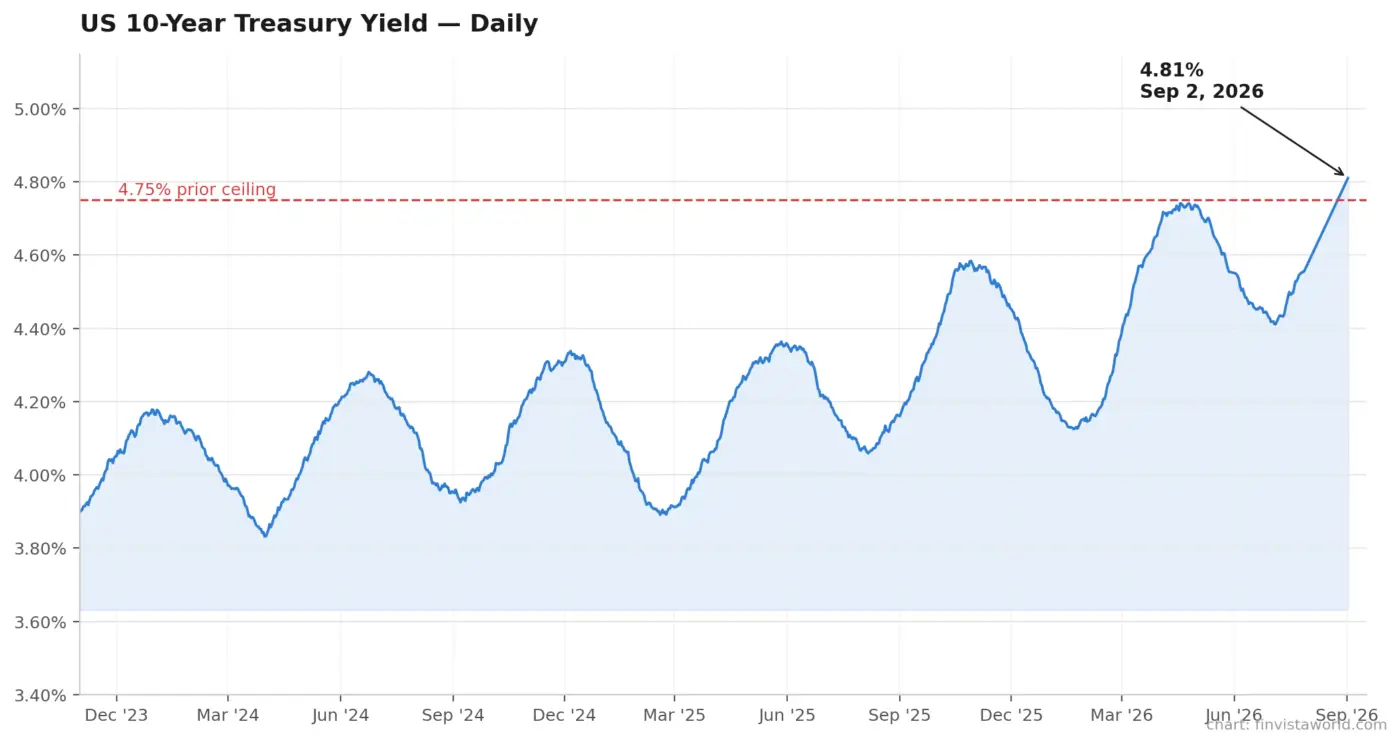 ADP Jobs Miss Collides With Rising Yields: Wall Street Stalls as 10-Year Hits 4.81%
 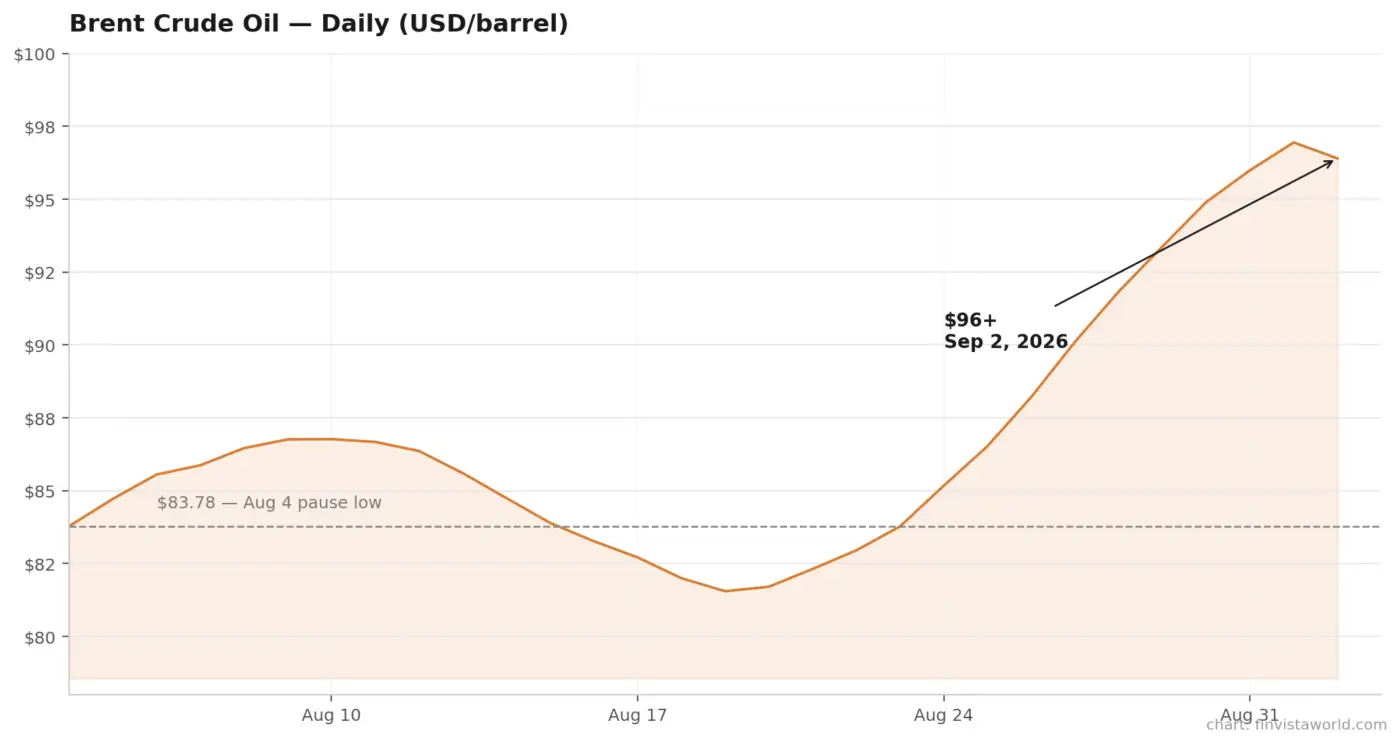 Iran War Reignites: Oil Tops $96, Stocks and Gold Slide Together as Fed Rate-Hike Odds Hit 70%
  Oil Sinks 6%, Dow Hits Record High as Iran Pause Reprices Markets – Crypto Sits It Out
 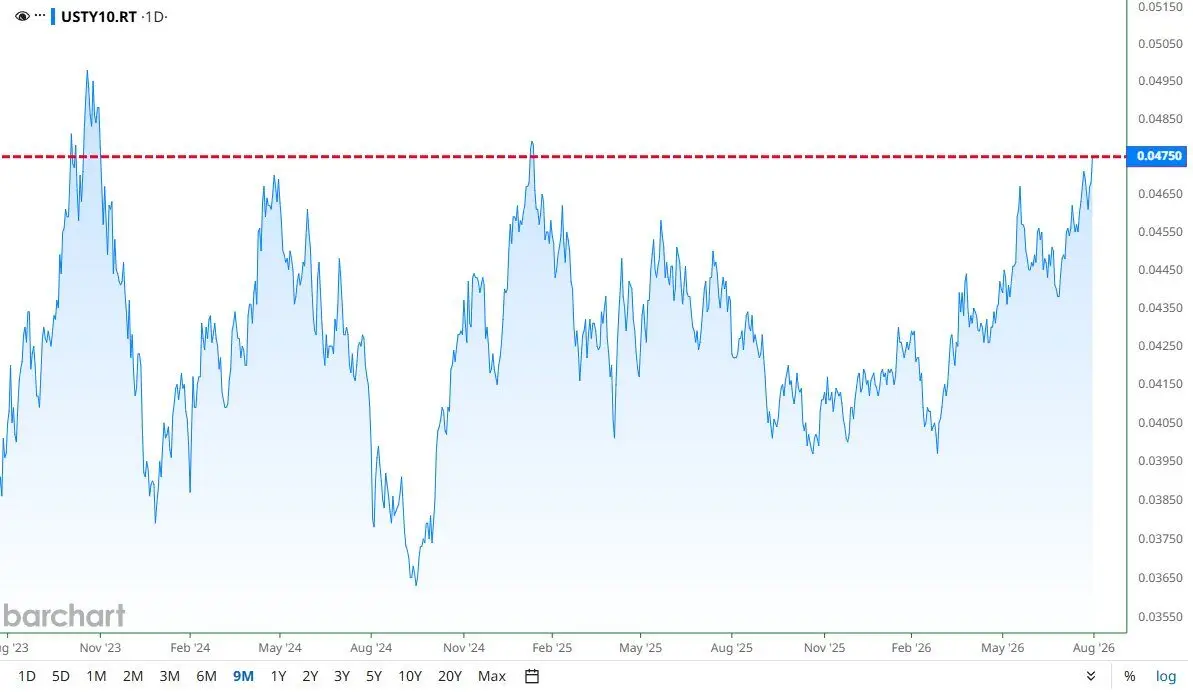 10-Year Yield Hits 4.75%, an 18-Month High – Why the Bond Market Is About to Revolt
  Bond Market Puts Warsh’s 2% Promise to the Test as 30-Year Yield Hits 19-Year High
 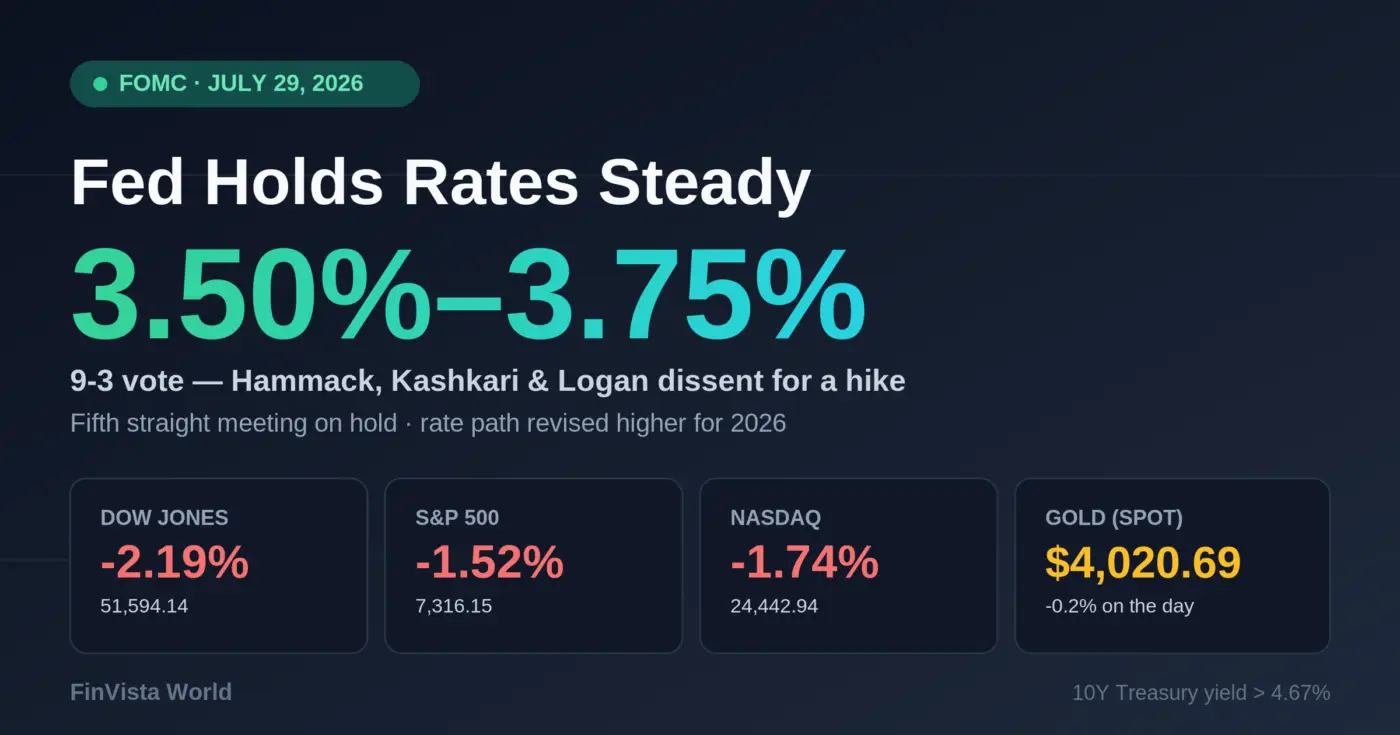 Fed Holds Rates Steady at July 2026 Meeting as Three Officials Dissent, Stocks Tumble