
Week 23 of 2026 (June 2–6) delivered one of the most event-packed trading weeks of the year, with critical economic data releases and central bank communications across the United States, the Eurozone, and the United Kingdom producing significant volatility across forex, commodity, and index markets. For binary options traders, economic calendar weeks like this represent both exceptional opportunity and heightened danger — the potential for large directional moves creates lucrative setups, but the unpredictability of market reactions around data releases can destroy positions entered without proper context and timing discipline. In this comprehensive analysis, we break down how to read, prepare for, and trade around economic calendar events using binary options, illustrated with concrete examples from Week 23’s market action.
Understanding the Economic Calendar: Your Most Important Trading Tool

The economic calendar is a schedule of data releases and events that have the potential to move financial markets. For binary options traders, it serves two essential functions: it tells you when to be especially cautious (around high-impact releases, when binary options can be settled at extreme prices that reflect a spike rather than a sustained move), and it tells you when to look for post-release directional trades (after the data has been absorbed and the market has established a clear direction).
Not all economic events are created equal. They are typically categorized by expected impact:
- High impact (red): Non-Farm Payrolls, CPI, Fed/ECB/BOE rate decisions, GDP. These can move markets by hundreds of pips within minutes and should be approached with extreme caution.
- Medium impact (orange): PMI, retail sales, trade balance, housing data. These produce meaningful but typically more contained market reactions.
- Low impact (yellow): Minor data releases that rarely produce significant moves. Generally safe to trade around without special precautions.
Week 23 Key Events: A Day-by-Day Breakdown

Monday, June 2 — US ISM Manufacturing PMI
The Institute for Supply Management’s Manufacturing PMI came in at 48.9 — below the expected 50.5 and still in contraction territory (below 50). The immediate market reaction was a modest weakening of the USD, as the data suggested the manufacturing sector remains under pressure from tight monetary conditions.
Binary options trading opportunity: Following the ISM miss, EUR/USD bounced from the 1.0730 support zone toward 1.0780 over the subsequent hour. Traders who waited 5–10 minutes after the release for the initial volatility to settle, then entered a CALL option at 1.0740 with a 45-minute expiry, captured a clean 85% payout as EUR/USD closed above 1.0780.
Tuesday, June 3 — Eurozone CPI and US Job Openings (JOLTS)
Eurozone May CPI printed at 2.1% year-on-year, in line with expectations. The lack of surprise meant EUR/USD reaction was muted — a reminder that when data matches forecasts, the market typically “buys the rumor, sells the fact” or simply moves sideways.
The more impactful release was US JOLTS (Job Openings and Labor Turnover Survey), which showed 8.4 million job openings in April — modestly above the 8.1 million forecast. This reinforced the strong labor market narrative and provided mild USD support, nudging EUR/USD lower by about 30 pips in the afternoon session.
Key lesson: In-line data rarely produces tradable binary options setups because there is no directional conviction from the data itself. The best setups occur on meaningful beats or misses relative to expectations.
Wednesday, June 4 — US ADP Employment Change and FOMC Minutes
ADP’s private sector employment survey showed 198,000 new jobs in May — slightly below the expected 215,000. USD initially dipped on the miss, but market focus quickly shifted to the FOMC Minutes released in the afternoon, which confirmed the Fed’s committee discussed the conditions under which rate cuts might be appropriate, while emphasizing that current data does not yet meet those conditions. This hawkish-leaning communication pushed USD back up.
Binary options trading opportunity: The USD whipsaw around FOMC Minutes — initial weakness followed by strength — is a classic pattern. Experienced binary options traders know to avoid the 30 minutes immediately after FOMC Minutes release, then look for directional clarity. Following the post-Minutes stabilization, USD/JPY Call options entered at 157.80 with 1-hour expiry captured the continued upside as USD/JPY pushed toward 158.20.
Thursday, June 5 — ECB Interest Rate Decision
The European Central Bank held its Deposit Facility Rate at 3.50% as expected, with ECB President Christine Lagarde’s press conference striking a modestly dovish tone — acknowledging that the June decision to hold does not preclude a rate cut in July if inflation continues to track lower. This interpretation drove EUR/USD sharply lower by approximately 50 pips in the first 15 minutes after Lagarde’s statement.
Binary options trading opportunity: ECB press conferences are among the highest-impact events for EUR/USD traders. The protocol for trading them successfully:
- Do not trade the rate decision itself — the market’s initial reaction can be violent and short-lived
- Listen to the first 5–10 minutes of the press conference to establish the primary tone (hawkish or dovish)
- Enter a PUT option on EUR/USD once a clear directional move has been established, with a 30-minute expiry to capture the trend continuation
- Avoid entering after price has already moved more than 40–50 pips from the pre-decision level — the risk-reward deteriorates significantly
Friday, June 6 — US Non-Farm Payrolls (NFP)
NFP is the single most important scheduled data release for forex and commodity binary options traders. May’s report delivered a significant beat: 218,000 jobs created versus the 190,000 consensus forecast, with the unemployment rate holding at 3.9% and average hourly earnings rising 0.4% month-on-month.
The initial market reaction was a sharp USD rally across the board: EUR/USD dropped approximately 60 pips within 10 minutes; Gold (XAU/USD) fell nearly $25 from $3,220 to $3,196; USD/JPY surged from 157.60 to 158.10.
NFP binary options strategy:
Never enter binary options immediately before NFP — the spread of potential outcomes is too wide. After NFP releases:
- Wait a full 5 minutes for the initial spike to settle
- Assess the data: strong beat = USD positive (EUR/USD Put, Gold Put, USD/JPY Call); significant miss = USD negative (EUR/USD Call, Gold Call)
- Look for a price level that has been tested once or twice in the post-release action — this suggests the market has established the new fair value post-data
- Enter at that level with a 30–60 minute expiry to capture the trend continuation
Week 23 Summary: What Traders Should Take Away
| Event | Result vs. Forecast | USD Impact | Best BO Strategy |
|---|---|---|---|
| ISM Manufacturing | Miss (48.9 vs 50.5) | Bearish | EUR/USD Call post-release |
| JOLTS Job Openings | Beat (8.4M vs 8.1M) | Bullish | EUR/USD Put trend continuation |
| FOMC Minutes | Hawkish tone | Bullish | USD/JPY Call after 30-min wait |
| ECB Rate Decision | Hold (as expected) | EUR bearish | EUR/USD Put during press conference |
| NFP | Big beat (218K vs 190K) | Strongly bullish | EUR/USD Put 5 min post-release |
Building Your Economic Calendar Trading Playbook
The most effective way to trade economic calendar events with binary options is to develop a written playbook — a pre-defined set of rules for how you will approach each major event type. Your playbook should specify: which assets you will watch, how long you will wait before entering after the release, what payout thresholds you require (never accept less than 75% on a news trade), and your maximum number of trades per event.
Discipline in following your playbook — especially the “wait before entering” rule — is what separates traders who profit from news events from those who repeatedly get caught in the volatility spikes.
Frequently Asked Questions
Should I close binary options positions before major news?
Most binary options platforms do not allow early exit, so the better strategy is to avoid entering positions that will expire during or immediately after a major news event. Check the economic calendar before placing any trade and ensure your expiry window does not overlap with a high-impact release.
Which economic releases move binary options markets the most?
In order of typical market impact: US Non-Farm Payrolls (monthly, first Friday), Federal Reserve rate decisions and press conferences, CPI inflation data (US, Eurozone, UK), ECB and BOE rate decisions, US GDP preliminary release, and major PMI surveys.
How far in advance should I check the economic calendar?
Review the week ahead every Sunday before trading begins. Each morning, check the day’s specific events and their scheduled release times. Many traders set phone alerts 30 minutes before high-impact releases to ensure they are not caught mid-trade when the data drops.
⚠️ Risk Disclaimer: Trading binary options around economic data releases involves substantial risk. Market reactions to data can be unpredictable and contrary to the headline number. This content is for educational purposes only and does not constitute investment advice. Always trade with strict position sizing and never risk capital you cannot afford to lose.
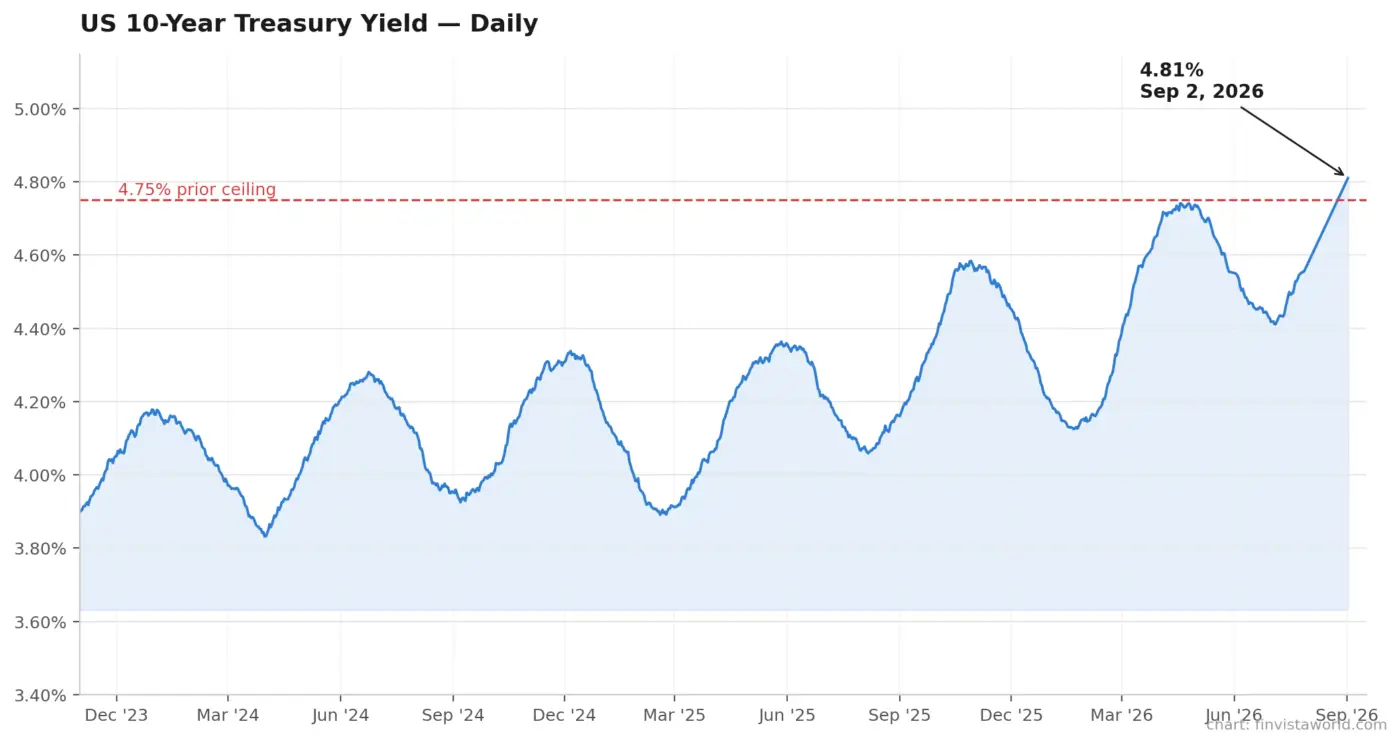 ADP Jobs Miss Collides With Rising Yields: Wall Street Stalls as 10-Year Hits 4.81%
 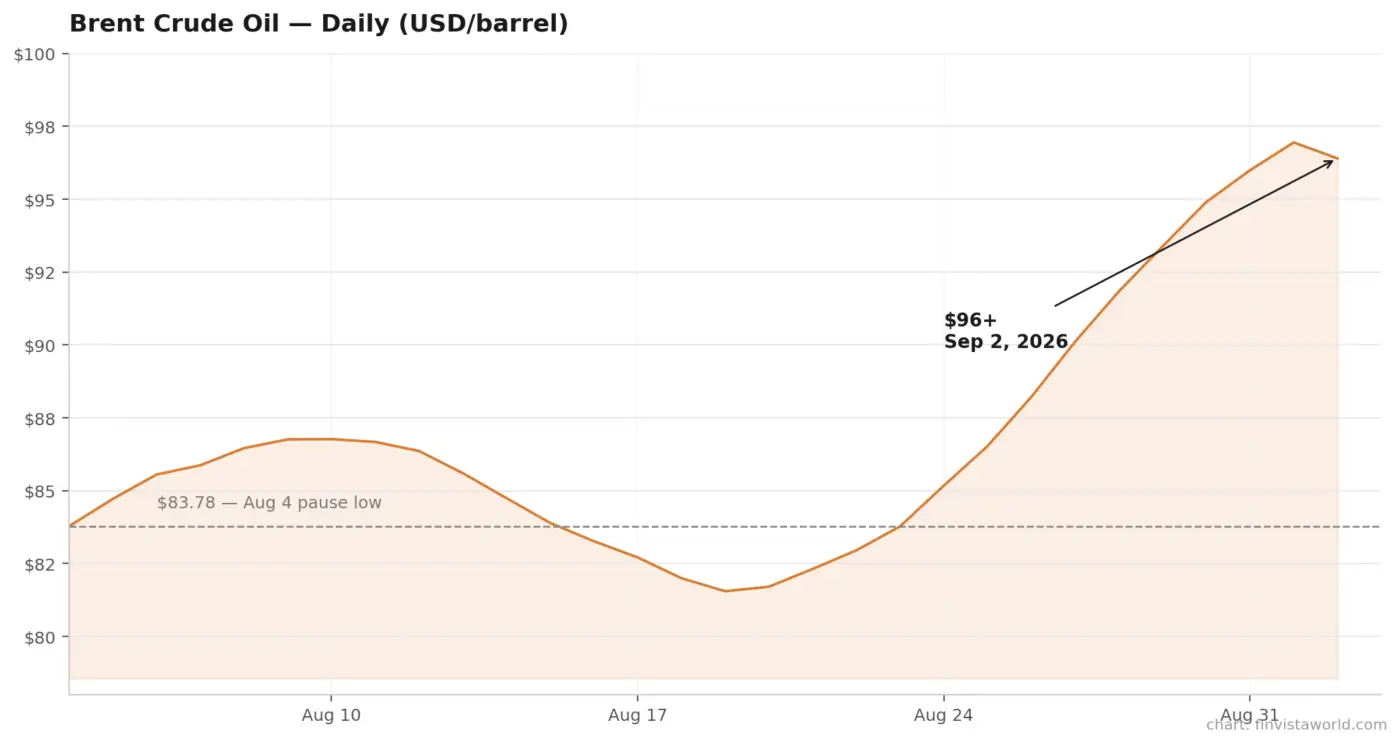 Iran War Reignites: Oil Tops $96, Stocks and Gold Slide Together as Fed Rate-Hike Odds Hit 70%
  Oil Sinks 6%, Dow Hits Record High as Iran Pause Reprices Markets – Crypto Sits It Out
 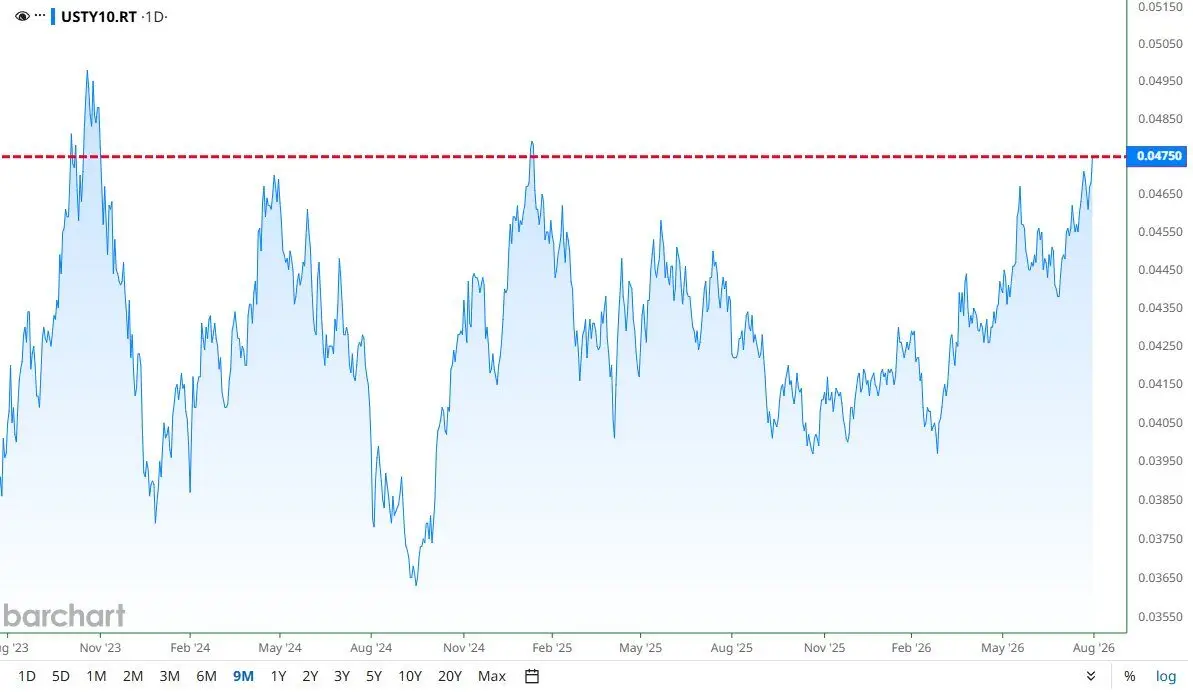 10-Year Yield Hits 4.75%, an 18-Month High – Why the Bond Market Is About to Revolt
  Bond Market Puts Warsh’s 2% Promise to the Test as 30-Year Yield Hits 19-Year High
 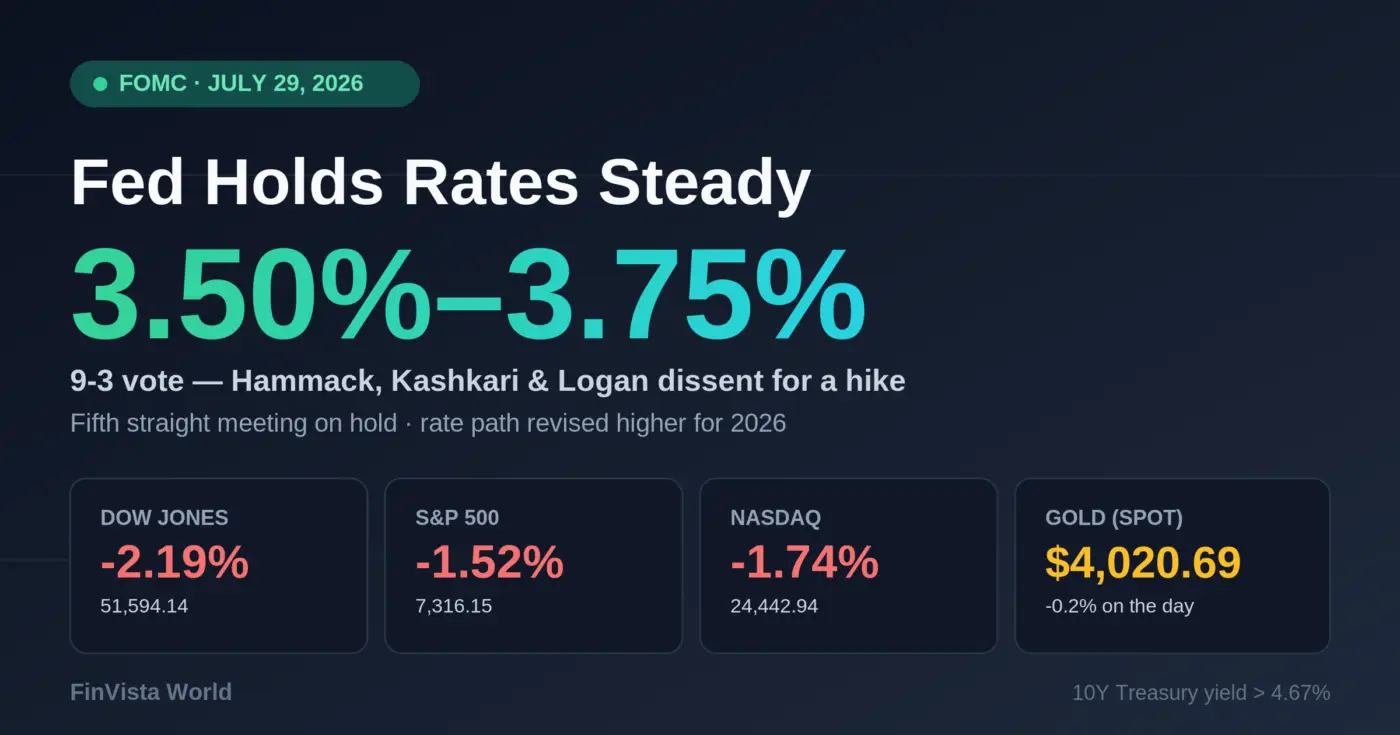 Fed Holds Rates Steady at July 2026 Meeting as Three Officials Dissent, Stocks Tumble